Scopolamine – The World's Scariest Drug
Introduction
VICE travels to Bogotá, Colombia, to investigate scopolamine, a powerful drug commonly associated with burundanga and widely known as "The Devil’s Breath." Used medically in controlled doses, scopolamine can also cause severe confusion, disorientation, drowsiness, and memory loss when misused, contributing to its notorious reputation as a drug used in robberies and other crimes.
The investigation explores scopolamine-containing plants found in Colombia, the drug’s legitimate medical uses, and accounts from people who say they were drugged, robbed, or assaulted after being exposed to burundanga. It also examines stories surrounding the drug’s history and its alleged ability to make victims unusually compliant—claims that have helped blur the line between documented criminal use and sensationalized accounts of mind control.
Through interviews with victims, dealers, and local experts, VICE examines the crime, fear, mythology, and real risks surrounding scopolamine in Colombia.
Scopolamine & Drug-Facilitated Crime
Scopolamine has been documented in cases of drug-facilitated crime, particularly in South America, where victims have reported severe memory loss, confusion, and unusually submissive behaviour after suspected intoxication. However, reliable data are limited, and the drug's reputation has also become intertwined with sensationalized stories and urban legends. Claims that scopolamine can instantly "zombify" someone or completely eliminate free will go beyond what the available evidence can establish.
Additional Resources:
Share This Resource!
Share This Resource!
Quotes
"The deal with Burundanga is that it pretty much eliminates your free will. You're awake and you're articulate, and to anyone else watching you, it seems like you're perfectly fine. But you've completely lost control of your own actions. So, you're at the whim of suggestions and that's how people take advantage of you."
"One gram of scopolamine is like a gram of cocaine. It's the same shit. It has the same density, weight and look. But with one gram you can kill up to 10 or 15 people. That's why it's so extremely delicate and hard to get. I can get it because I know where to get fucking anything."
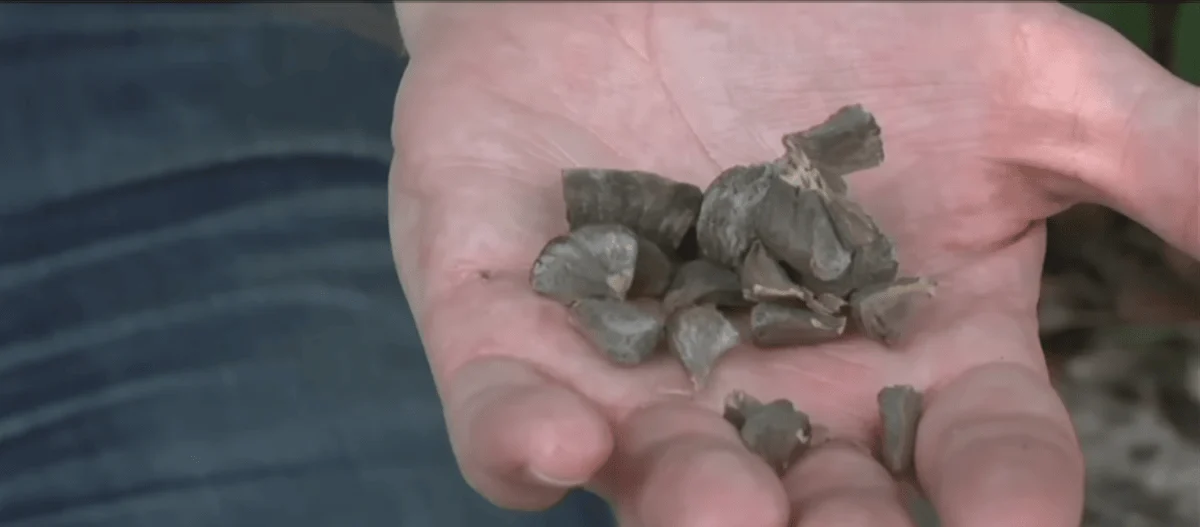
"It's called Floripondio. Its scientific name is Datura. From there you extract the scopolamine. But in Colombia we also call it Borrachero or The Devil's Plant. The powder is extracted from the cacao sabanero. That's the fruit. But then powder has to be treated chemically. To grind it, bleach it and make it into a pill or whatever, you need a chemical. It's like how you use ether to process cocaine etc. The process is completely chemical."1
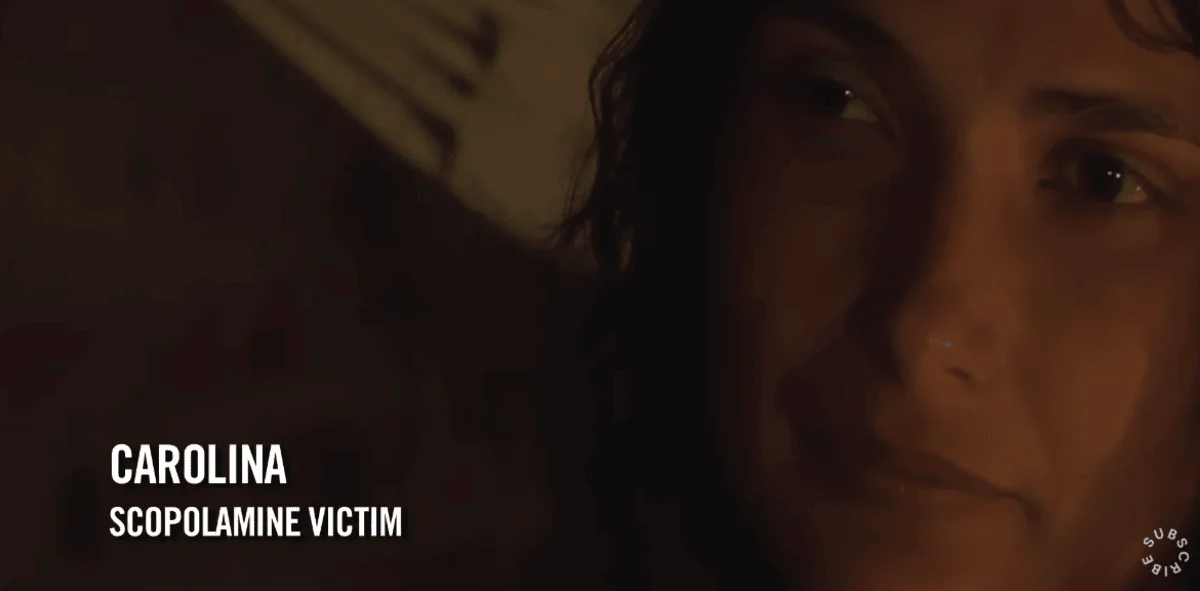
"You're like a complete zombie, following the people giving you orders … It's like you lose all your willpower … you can't react. You lose the ability to say, Hey! There's something very wrong with all of this."
"From a medical point of view, it's the perfect substance for criminal acts because the victim won't remember anything and, therefore, won't report anything. Because when they try to remember who gave it to them, their memory is gone. And when they wake up and realize that they've been robbed, they don't remember that they themselves collaborated. And so, that's the property that is thought to be exploited from substances like these that have the ability to hypnotize the patient."
"Scopolamine is by no means a modern revelation here in Colombia. The Indigenous people in this area have had a whole bunch of uses for the drug. For example, when a chieftain died, all his assorted females, wives, mistresses, what have you, they had to go as well. Now that could be a bit of a dicey process. But what better way to shore things up than to slip them some scopolamine and suggest they walk into a grave. When they did, they were buried alive."2
"In modern times, there's a whole litany of fucked-up people who've been using scopolamine for their benefit. For example, in the 1930s and '40s, Josef Mengele had the drug imported from Colombia to Germany to use in some of his interrogations. More recently, the CIA tried to use the drug in the '60s during the Cold War as sort of a truth serum. The problem with all of this is that in addition to a whole lot of truth, there's a good bit of hallucination involved."3,4
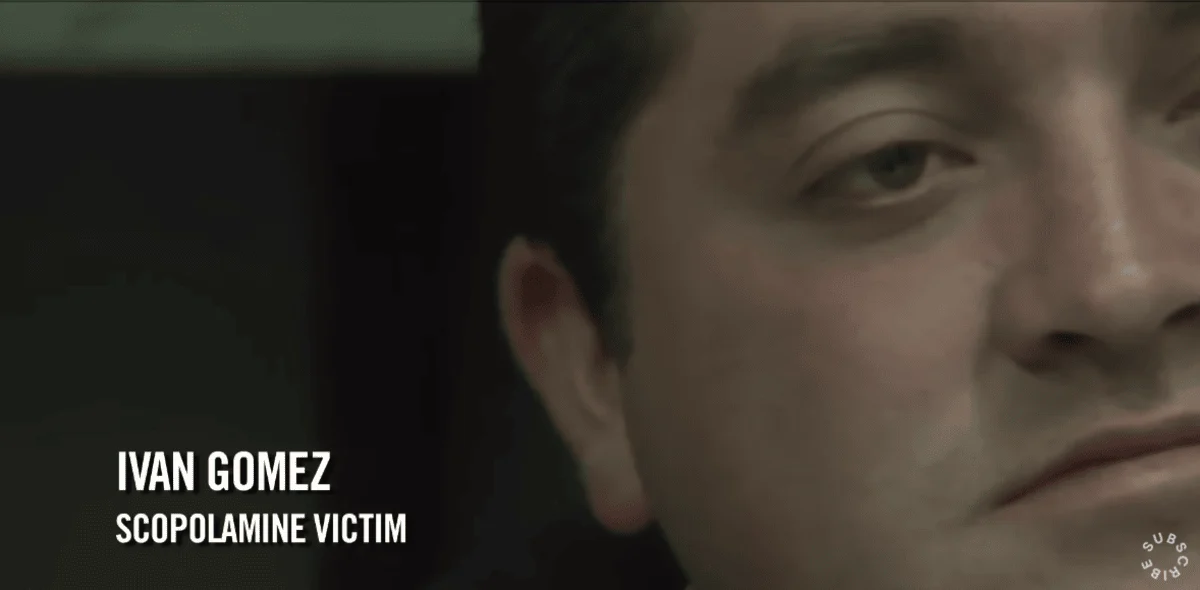
"I woke up in a neighbourhood park. Beaten. They stole my documents. They took my money from the ATM. They took cash advances from my credit cards. I lost about 6 million pesos (USD $3,100). The capacity that women have to enchant you, simply put, it's beauty that kills you in the end."
"This drug has always been kind of inextricably linked to sex in some way or another. From its earliest uses, to eliminating a lingering mistress, to fallen chieftains, to its eventual use in easing the pain of childbirth, to the stories we're hearing on the streets today about prostitutes giving it to unsuspecting johns, or about men turning women into prostitutes by suggesting they go and earn some cash. It always seems to come back to sex in one way or another. And it always seems to start at places like this."5
1 Scopolamine occurs naturally in several highly toxic plants from the nightshade family, including species of Brugmansia. In Colombia, these plants have long been associated with both traditional practices and accidental poisonings due to their powerful psychoactive effects.
2 Long before its association with crime, scopolamine-containing plants were used by some Indigenous communities in the Colombian Andes during spiritual ceremonies, divination rituals, healing practices, and rites of passage. Because the plants are highly toxic, their use was typically guided by experienced healers or shamans.
3 Although scopolamine has been studied by various governments and intelligence agencies, historians have found no evidence that Josef Mengele imported the drug from Colombia or used it during interrogations. Mengele's documented experiments at Auschwitz focused primarily on twins, genetics, infectious diseases, and other eugenics-related research.
4 During the Cold War, U.S. intelligence agencies explored scopolamine and other psychoactive substances as potential "truth serums" and behavior-control tools. However, researchers found that the drug often produced confusion, suggestibility, and hallucinations rather than reliably truthful information.
5 While scopolamine has been documented in robberies, assaults, and cases of drug-facilitated crime, many of the more extreme claims surrounding "Devil's Breath" have been challenged by researchers. Experts note that stories involving instant mind control, prolonged coercion, or trafficking through brief exposure often blend documented criminal use with urban legends and media sensationalism.
Continue Learning
Explore the topics covered in this resource with the links below. If you're looking for something specific or have a suggestion, feel free to contact me.



Share Your Review
Your perspective matters. By sharing your honest thoughts, you can help others understand what this resource is really like beyond a simple summary. Whether it resonated with you, challenged your thinking, or wasn't what you expected, your feedback helps build a more useful and transparent collection of addiction and mental health resources.
Your perspective matters and helps improve this collection of addiction and mental health resources.
There are no reviews yet. Be the first one to write one.