Seattle is Dying
Introduction
Seattle is Dying explores the intertwined crises of addiction and homelessness in Seattle. It tells the story of a deep, simmering frustration that escalated into anger and outrage, highlighting the experiences of people who had once felt compassion but no longer feel safe, heard, or protected. It's about lost individuals roaming the streets, disconnected from home, family, or reality, chasing a drug that in turn relentlessly pursues them.
The film examines not only the harm they inflicted upon themselves, but also the toll it took on the fabric of the community. It speaks of a once-beautiful city under strain, and a growing crisis of faith among Seattleites who no longer felt at home in the place they once loved. But there's another side to this story—a potential solution, a glimmer of hope in a city that seems to have run out of ideas. The question remains: what if Seattle is dying and we don't even realize it?
Additional Resources:
Share This Resource!
Share This Resource!
Quotes
"This is what suffering looks like. This is pain, ranting and raving, screaming silently, coming completely unraveled before our eyes and then tomorrow, he'll wake up and relive the nightmare all over again. Starving, eating trash from a garbage can. Look at the people look by, of course they're not shocked – they see it every day. How can this be who we are? How can this be what we allow? How did the word ‘compassion' get twisted into this sickening reality?"
"Seattle and outlying areas spend one billion dollars addressing and responding to the homeless situation every year … the cost isn't a billion dollars a year – the cost is quality of life. The cost is people not wanting to take their families downtown anymore, families not feeling safe in their own neighborhoods. The cost is people no longer feeling like they are heard, no longer feeling protected. The cost is people dying in the streets and the rest of us getting used to seeing it, numb to the suffering. The cost is incalculable. How did we get to this point?"
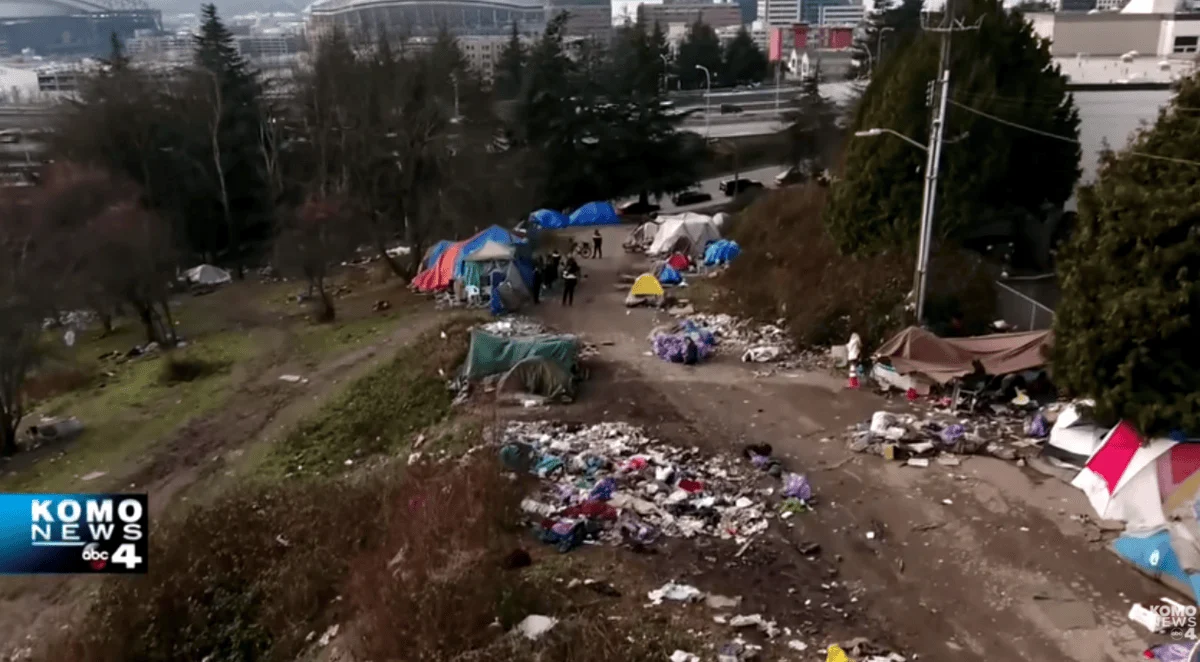
"He started a Facebook page called Seattle Looks Like Shit. It's not meant to be funny, it's meant to be sad … Day after day, one after another, the pictures on the page from every corner of the emerald city paint a picture of rots and filth that is being allowed to fester on the streets and in the lots and under the overpasses of a once proud city."
"People come here because it's called Free-attle and they believe if they come here, they will get free food, free medical treatment, free mental health treatment, a free tent, free clothes and will be free of prosecution for just about everything; and they're right. It didn't use to be that way. Law enforcement offers used to be able to enforce the laws. In the last five years, there has been a culture shift, and it started with the legislature decriminalizing felonies and dumping convicts onto the streets."1
"I would say all of the [homeless] people living in sidewalk tents, doorways, and encampments suffer from drug addiction, or, more rarely, a serious debilitating mental illness."2
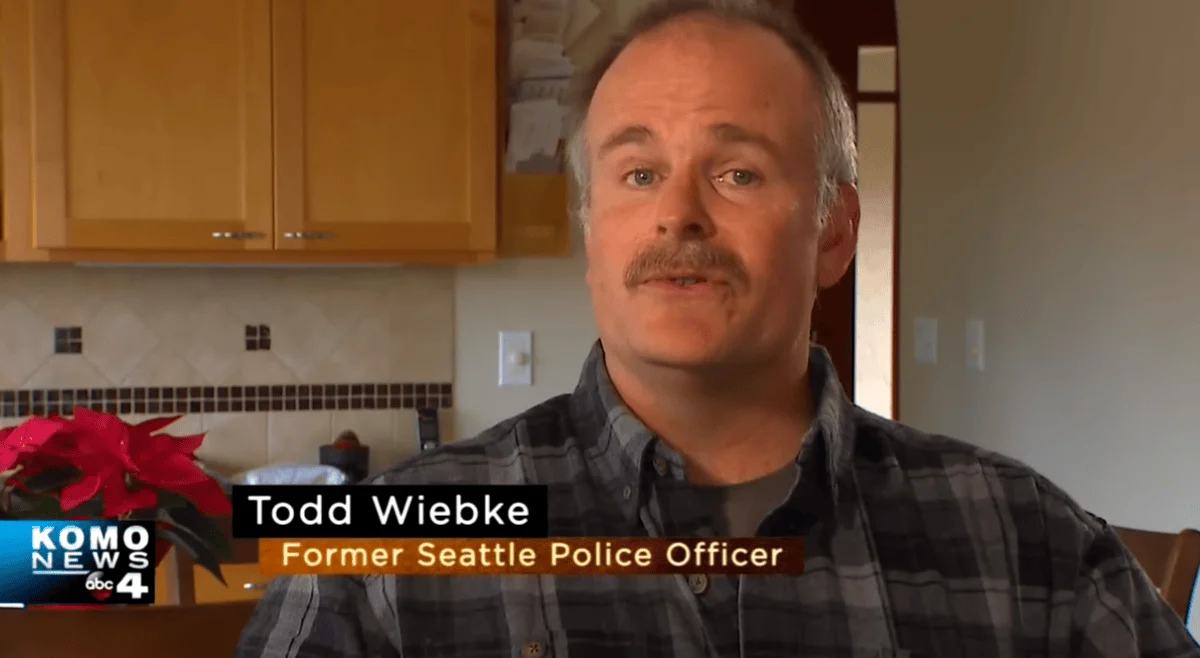
"I've said it before and I'll say it again, the only thing I can equate it to is we're running a concentration camp without barbed wire, up to and including the medical experiment of poisoning these people with drugs. I don't know how else to put it and it's infuriating."
"Drug dealers selling crack, meth and heroin are evil people preying on the weakest part of society and belong in prison. We arrest them and nothing happens to them. They are back out on the street immediately. We need to acknowledge the disregard for human life inherent in selling life ending drugs and lock the dealers up for serious time."
"We can't just ignore out way out of this, we can't arrest our way out of this. People are dying and there's something we can do to stop that."
"I used to be proud of the work I did and actually thought I was doing something important. I took pride in working hard and making good arrests while treating everyone with the respect they deserved. Now it's just about trading hours for dollars and it's frustrating to me knowing I am becoming more apathetic and caring less about doing a good job."
"People who steal and commit crime to get their drugs eventually end up in this place – the Rhode Island Department of Corrections. It's not a nice place, it's a prison, but inside the walls something amazing happens. Every day the inmates, who are in the Medication-Assisted Treatment program line up and take their medicine. There are three opiate blockers that work - Methadone, Suboxone and Vivitrol. They are FDA approved, they get people off heroin, they save lives … It stabilizes us physically so that we can do the emotional work that we need to do to heal from the disease."3
1 Washington State and Seattle have implemented evolving policies related to drug enforcement and homelessness response, including periods of reduced emphasis on low-level drug possession enforcement and expanded harm reduction services. However, these policies do not eliminate criminal liability for most offenses, and enforcement practices vary across time and jurisdictions. Public perceptions of complete "decriminalization” often overstate the actual legal framework.
2 While addiction and mental health issues are highly prevalent among people experiencing homelessness—particularly those in visible, unsheltered settings like tents or encampments—data suggests they do not affect all individuals, and they are often consequences of homelessness rather than solely the cause.
3 Medication-assisted treatment (MAT), including methadone, buprenorphine (Suboxone), and naltrexone (Vivitrol), is widely recognized as an evidence-based treatment for opioid use disorder. Research shows these medications reduce overdose risk, improve treatment retention, and support long-term recovery outcomes when combined with psychosocial support. According to the CDC, SAMHSA, and NIDA, these medications reduce the risk of overdose and mortality, with treatment reducing illicit opioid use by up to 90%.
Continue Learning
Explore the topics covered in this resource with the links below. Whether you're looking for a quick overview, an in-depth article, or another video, these resources can help deepen your understanding. If there's a topic you'd like to see covered or you're looking for something specific, feel free to contact me.
Explore the topics covered in this resource with the links below. If you're looking for something specific or have a suggestion, feel free to contact me.




Share Your Review
Your perspective matters. By sharing your honest thoughts, you can help others understand what this resource is really like beyond a simple summary. Whether it resonated with you, challenged your thinking, or wasn't what you expected, your feedback helps build a more useful and transparent collection of addiction and mental health resources.
Your perspective matters and helps improve this collection of addiction and mental health resources.
There are no reviews yet. Be the first one to write one.