HookedRx: From Prescription to Addiction
Introduction
HookedRx: From Prescription to Addiction takes a close, compassionate look at Arizona's opioid crisis through the lived experiences of those who confront it every day. The documentary features frontline workers who respond to overdoses, policymakers working to repair gaps in a strained system, and counsellors helping individuals piece their lives back together. It also includes powerful voices from parents who have lost children and those who have made it to the other side of recovery, offering a full picture of both the heartbreak and the hope within this crisis.
The film traces how addiction often begins with a prescription that seems harmless at first, only to escalate into dependence and, for many, devastating consequences. It sheds light on how easily these pills can be obtained and uncovers troubling stories about medical professionals who misused their prescribing power. Through honest storytelling and firsthand accounts, HookedRx reveals how the crisis took hold in Arizona and why change—both systemic and community-led—is urgently needed.
Articles for HookedRx:
Share This Resource!
Share This Resource!
Quotes
"We are killing more people [with] prescription drugs and a large percentage of them are opioids prescribed by doctors. And we've also seen that a large percentage of people that get addicted to these prescription-type opioids often resort to heroin. Opioid and prescription drug related deaths have increased every year for the last 5 years. It's a growing problem, it's something that needs to be addressed, and it's getting worse every year."1,2
"This is an epidemic that isn't hidden, it's not somewhere far, far away. It's right in our own backyards, our own neighbourhoods, our own schools, and it's something we're either going to address as leaders, parents, and policymakers, or we're going to see more kids die and more avoidable deaths."
"We're prescribing a lot more opiates than we ever used to before. Opiates were thought to be fairly safe, so a lot of different practitioners were prescribing opiates for various pain. So as that trend continued on and on, we were seeing more and more patients that had developed addiction to opiates."
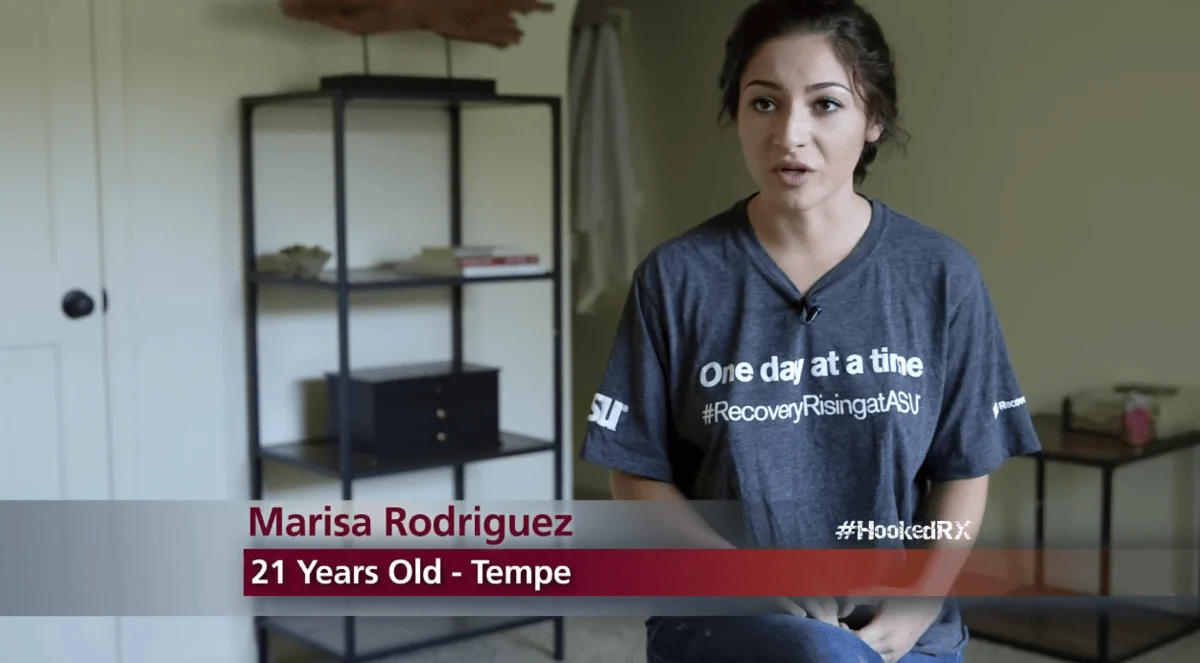
"Being sober and staying sober wouldn't be such an amazing celebration if we didn't realize that the other alternative is death."
"Once you've tried your drug of choice, you try and catch the same high you got the first time, but you never do. So, I took 26 Percocets in two hours, so I OD'd. But I didn't actually go to the hospital over it, which was kind of weird. I never really sought medical attention because I didn't want to get red-flagged and not be able to get the pills, to be honest. It's not a fun feeling to know that you're going to die over a drug, something that you could have prevented."
"The pill bottle says 1-2 every 4-6 hours, so I'm going to take 2 every 4. I'm going to push those limits because I like the way that it makes me feel. It doesn't just take away the pain, it makes your whole life seem like it's amazing."
"It is no longer an inner city versus suburban problem – it's everybody's problem. I've worked in multiple different emergency departments from inner city to suburban to rural and everyone has this problem. It does not discriminate against gender, age, income. This has hit everyone."3
"There's no difference in what I was doing that the people on the street do with their heroin every day. They go to somebody on the street corner with dope and I was going to my doctor, and he was writing me the prescriptions."
"This is a horrific disease that needs to be treated, can be treated. Recovery does happen. And so, I want there to be some hope. And I think in the long run if you're able to survive it, you come out a stronger, more compassionate person."
1 Opioid-involved overdose deaths have increased dramatically over the past two decades, though recent CDC data show changing patterns in the epidemic. In 2023, nearly 80,000 overdose deaths in the United States involved opioids, with most deaths now involving illicitly manufactured synthetic opioids such as fentanyl rather than prescription medications. While prescription opioid–involved deaths have declined in recent years, opioids overall remain a leading driver of overdose mortality.
2 Research from the National Institute on Drug Abuse shows a strong but evolving link between prescription opioid misuse and heroin use. Historically, most people who used heroin first misused prescription opioids, but more recent data indicate shifting patterns in initiation. While prescription opioid misuse remains a risk factor for heroin use, only a small proportion of people who misuse prescription opioids transition to heroin, and newer studies show increasing variation in the first opioid used among people entering treatment.
3 CDC data indicate that the opioid overdose crisis is a nationwide public health emergency affecting all demographic and geographic groups, including urban, suburban, and rural communities. While the epidemic impacts nearly all populations, overdose rates and access to treatment vary across demographic groups, with significant disparities in outcomes and care.
Continue Learning
Explore the topics covered in this resource with the links below. Whether you're looking for a quick overview, an in-depth article, or another video, these resources can help deepen your understanding. If there's a topic you'd like to see covered or you're looking for something specific, feel free to contact me.
Explore the topics covered in this resource with the links below. If you're looking for something specific or have a suggestion, feel free to contact me.




Share Your Review
Your perspective matters. By sharing your honest thoughts, you can help others understand what this resource is really like beyond a simple summary. Whether it resonated with you, challenged your thinking, or wasn't what you expected, your feedback helps build a more useful and transparent collection of addiction and mental health resources.
Your perspective matters and helps improve this collection of addiction and mental health resources.
There are no reviews yet. Be the first one to write one.