A Royal Hangover
Table of Contents
Introduction
A Royal Hangover explores Britain’s long-standing binge drinking culture and the social acceptance of over-indulgence. The documentary examines why alcohol plays such a central role in UK society, the staggering costs of this behavior—over £21 billion annually—and the estimated 1.6 million people dependent on alcohol. Through wit, insight, and frank discussion, the film provides a clear-eyed look at the challenges Britain faces in confronting its drinking problem.
Russell Brand, who struggled with heroin, alcohol, and other addictions before finding recovery through Alcoholics Anonymous and Narcotics Anonymous, contributes his perspective to the documentary. He shares his personal journey, including the turning points that led him to sobriety, and advocates for viewing addiction as a manageable condition rather than a moral failing. Brand’s candid reflections, combined with the documentary’s broader analysis, provide a compelling portrait of the UK’s relationship with alcohol and the urgent need for cultural and personal interventions.
Quotes
“The medics told us to stop filming while they help this guy covered in sick [vomit]. Then they turned around and started laughing at us. They accused us of wasting their time because this guy was only pissed [drunk]. The fact that we were actually concerned for his health was apparently really funny. It just goes to show how normalized scenes like this are on our streets and how we’ve all essentially become numb to it.”
“I’ve seen patients where I’ve gone in to talk to them and have made it perfectly clear to them that they are going to kill themselves if they don’t stop drinking, and their response is, If those are my choices, I’m ready to die.”
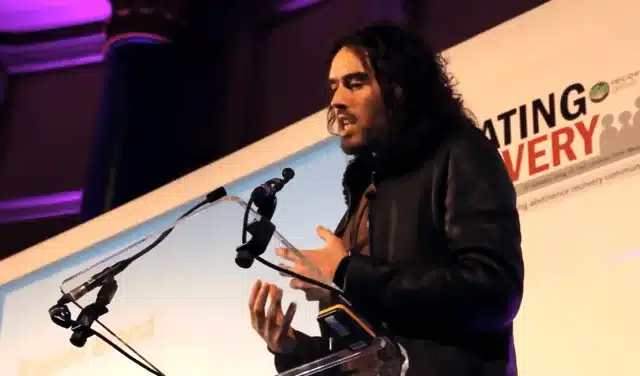
“The only community that I’ve ever really felt actually part of, not outside of, is the community of drug addicts and alcoholics. When I was at school, I didn’t feel like I fit in. I’m the only child of a single mother and I didn’t feel like I fit into my family.”
RUSSELL BRAND
“I think it’s always very difficult for people who aren’t an alcoholic, or who don’t have a problem with alcohol, to see what it’s like to be an alcoholic. It just looks stupid, it looks ridiculous.”
“Access to treatment is a huge issue. Compared to drug treatment, alcohol is way down the list. I think there’s a real stigma still around accessing treatment for alcohol. It’s something that’s still perceived to be something to be ashamed of. Something that people are afraid to admit to themselves and to others – that they’ve got a problem.”
Continue Learning
Share This Resource!
Share This Resource!

Brenda H.
BA Psych, Grad. Cert. Addictions & Mental Health
Driven by a deep personal connection to these topics, I created AMH Resources to bridge the gap between academic knowledge and everyday support. I watch, read, and summarize a wide range of free resources to help you navigate the overwhelming amount of information available and find what resonates with your journey.
Share Your Opinion
Your perspective matters. By sharing your honest thoughts, you provide an insight that a simple summary can’t always capture. Whether something truly resonated with you or completely missed the mark, I want to hear about it. Your input helps build a more transparent collection of tools for anyone navigating addiction and mental health topics.
There are no reviews yet. Be the first one to write one.