Stigmatic: Our Opioid Crisis
Introduction
Stigmatic: Our Opioid Crisis explores the opioid epidemic through the experiences of people directly affected by addiction, including law enforcement, health-care professionals, advocates, and individuals in recovery. Through personal interviews and community discussions, the film examines the role of prescription opioids and heroin while focusing on how stigma can prevent people struggling with addiction from seeking help.
The documentary also looks at decriminalization, different approaches to treatment and recovery, and the wider responsibility communities have in responding to addiction. Throughout these discussions, Stigmatic challenges the shame and judgment surrounding substance use disorder and argues that people struggling with addiction should not be left to face it alone.
Additional Resources:
A significant portion of Americans who believe opioid addiction results from personal choices are less likely to support funding for policies and programs that assist people with opioid addiction.
Share This Resource!
Share This Resource!
Quotes
"The very first day I did heroin it was not as if I went looking for it. It became the convenient drug in my neighbourhood, and I simply went to be with my friends one afternoon and instead of people drinking or smoking marijuana, they had heroin … And it wasn't like I woke up that morning thinking, I think I will be doing heroin today. It was just there in front of me that afternoon."
"While heroin continues to steal headlines, prescription opiates can be just as deadly. Of the approximately 47,000 drug overdose deaths that occurred in 2014, almost 19,000 were tied to prescription pain relievers."1
"Physically, I looked like death, honestly. I got down to 90 pounds at one time. Every bone in my body was hanging out. When I think back, I honestly don't know how I made it out alive. I had dark circles under my eyes. My face was sunk in, my cheeks were sunk in, my hair was falling out. It ruined my whole body."
"A big majority of these patients ended up ... prescription addicts because of true medical needs. Some of 'em, yes, it was experimental, but a good portion of 'em had medical conditions, medical problems in which they were treated. And during that treatment and pain management they got addicted to a narcotic drug."
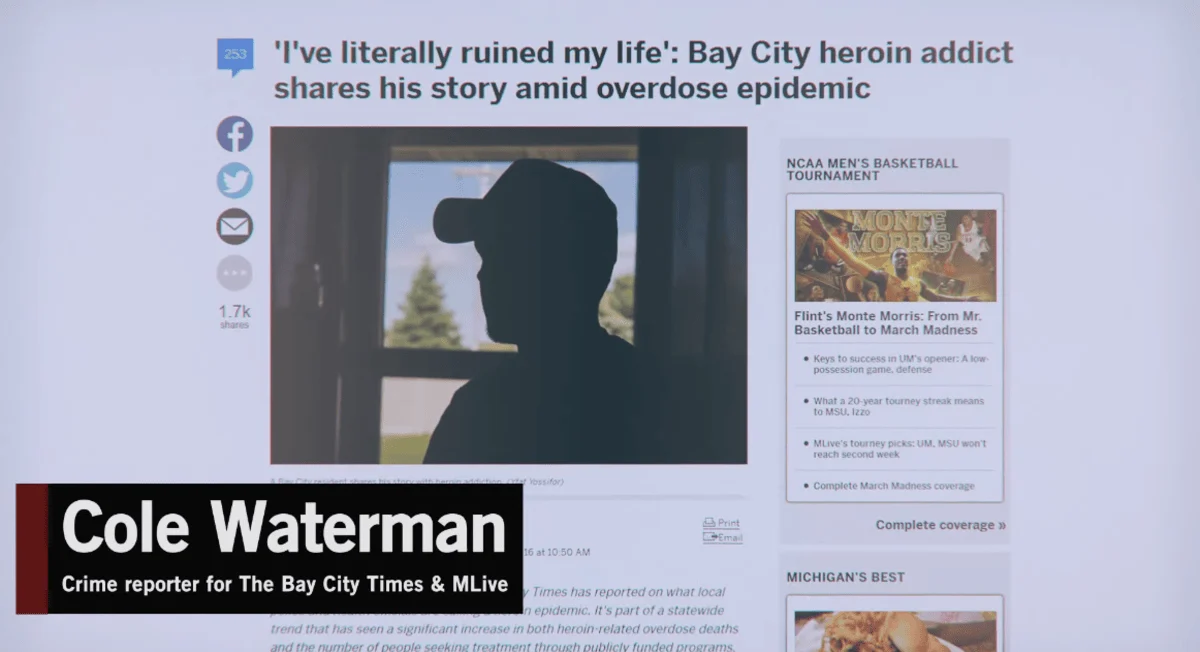
"My articles tend to get a lot of traffic and be shared on social media - Twitter and Facebook, and what not. There's a lot of people commenting on it ... sometimes it's not the best response because a lot of people who sound off typically have the myopic view of, it's not my problem, screw them, why are we wasting time on this? Let them OD, we'll all be better off."
Decriminalization & Reducing Stigma
"Efforts to remove stigma and allocate funding for treatment has become the never-ending debate for many of those fighting the epidemic. Though the county holds a number of meetings and summits, a singular solution remains intangible."
"Decriminalization is the lessening of criminal penalties. In this case, it means no longer saddling individuals with a substance use disorder with jail time or felony convictions for their condition. This does not mean an end to prosecuting dealers or suppliers. But rather to reduce stigma, making it easier for sufferers of substance use to open up about their struggle and receive the necessary treatment."
"Everyone's recovery story is different. For some, the road to recovery involves long-term supervised prescriptions, while others find guidance in spiritually-based 12-step programs. Whatever the path, recovery is an ongoing process."
"Pain can be good when it tells us something. A spike in opiate death rates is painful to watch but its message is plain: we did this. We let pharmaceutical companies push opiates for years without question, locked up sufferers of substance use disorder. We pushed the job of solving a crisis we barely understood to law enforcement, educators, and medical professionals without really equipping them to do so. This is our opioid crisis. We cannot ask its victims to solve it for themselves because we are all its victims and we will all be its conquerors. Someday soon, no one will have to suffer alone. Stigmatic."2,3
1 In 2014, prescription opioids were a major contributor to overdose deaths in the United States, but more recent data shows a significant shift in the epidemic toward synthetic opioids such as fentanyl. By 2024, overdose deaths were increasingly driven by illicit synthetic opioids rather than prescription pain medications, reflecting changes in the drug supply and patterns of use over time.
2 Opioid pharmaceutical marketing, led by Purdue Pharma's 1996 launch of OxyContin, aggressively promoted long-acting opioids for chronic non-cancer pain, shifting from strict, short-term usage paradigms. Misleading tactics—including overstating safety, downplaying addiction risks, and funding biased educational materials—drove widespread prescribing, fueling a major public health crisis, resulting in exponential overdose increases, and leading to billions in corporate settlements.
3 Research shows that individuals with substance use disorders who are incarcerated often receive inadequate treatment, despite evidence that in-prison treatment and continued care after release can reduce both drug use and recidivism. The period immediately following release from incarceration is also a particularly high-risk time for fatal overdose, with formerly incarcerated individuals facing dramatically elevated overdose mortality risk compared to the general population.
Continue Learning
Explore the topics covered in this resource with the links below. Whether you're looking for a quick overview, an in-depth article, or another video, these resources can help deepen your understanding. If there's a topic you'd like to see covered or you're looking for something specific, feel free to contact me.
Explore the topics covered in this resource with the links below. If you're looking for something specific or have a suggestion, feel free to contact me.








Share Your Review
Your perspective matters. By sharing your honest thoughts, you can help others understand what this resource is really like beyond a simple summary. Whether it resonated with you, challenged your thinking, or wasn't what you expected, your feedback helps build a more useful and transparent collection of addiction and mental health resources.
Your perspective matters and helps improve this collection of addiction and mental health resources.
There are no reviews yet. Be the first one to write one.