Cocaine for Germany: Drug Dealing and Smuggling
Introduction
Cocaine for Germany investigates the growing flow of cocaine into Europe and the international smuggling routes and techniques challenging law enforcement. In 2021, customs officials at the Port of Hamburg uncovered a record-breaking 16-ton cocaine shipment, illustrating the enormous quantities of the drug moving through major European ports.
Tracing the journey of cocaine from South America to Europe, the documentary follows its path through Africa, Spain, and major shipping hubs before reaching dealers and consumers in cities such as Berlin. It examines how the cocaine trade operates, the efforts of authorities to disrupt it, and the individuals and criminal networks profiting from an increasingly lucrative market.
Through law enforcement, experts, and personal stories, Cocaine for Germany also explores the social and economic conditions that enable smuggling, the challenges facing customs officials and police, and how growing demand continues to fuel the global cocaine trade.
Cocaine Trafficking Through the Port of Hamburg
Since Cocaine for Germany was released, authorities have continued confronting large-scale cocaine trafficking through the Port of Hamburg. Criminal networks have increasingly targeted port workers and infrastructure, using bribery, corruption, and intimidation to retrieve drugs hidden in shipping containers. German authorities have responded with increased security and investigations, but Hamburg remains an important entry point for cocaine arriving in Europe, reflecting the continuing challenge of disrupting a highly profitable international market.
Additional Resources:
Share This Resource!
Share This Resource!
Quotes
"Cocaine can boost mood and performance and it's no longer just a party drug. Many also do cocaine during the day when work or private problems become too great."1
"There is an unlimited supply, and also no change in the market price. We have fairly constant prices for cocaine on the black market, and we also have a constant level of ingredients we are checking in samples we have seized. This means that the market continues to function unchanged, although in some cases, many tonnes are being withdrawn from circulation."
"The port of Hamburg is considered a major gateway in Germany. Here, customs authorities intercept growing quantities of cocaine, a sign of how much of the substance is in circulation."
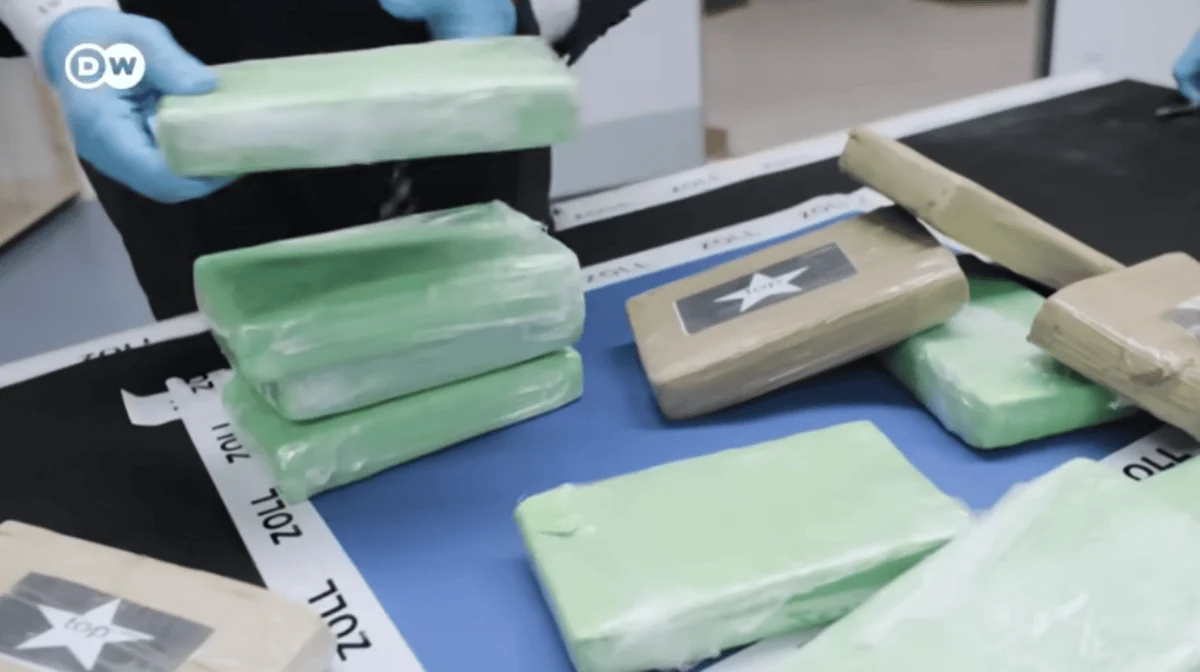
"16 tonnes of very pure cocaine from Paraguay, packed in tins of putty. Estimated market value: several billion euros. It was the largest find of cocaine in Europe. These are quantities that were unimaginable just a few years ago. Then, we were dealing with 20, 50, 80 kilos; today it’s 16 tonnes."
"Four and a half kilos are consumed every day in Berlin as evidenced by residue in the wastewater."
"When I realized that with the amount [of cocaine] I consume a day I wouldn't be able to pay the rent next month, that's when I actually realized the extent of it. I would have to think of ways how to get money quickly. And when it became clear to me that I was at the point that I would prostitute myself to get money for drug use, that was already rock bottom for me, my very personal rock bottom. So, I personally didn't know how I could save myself from that."
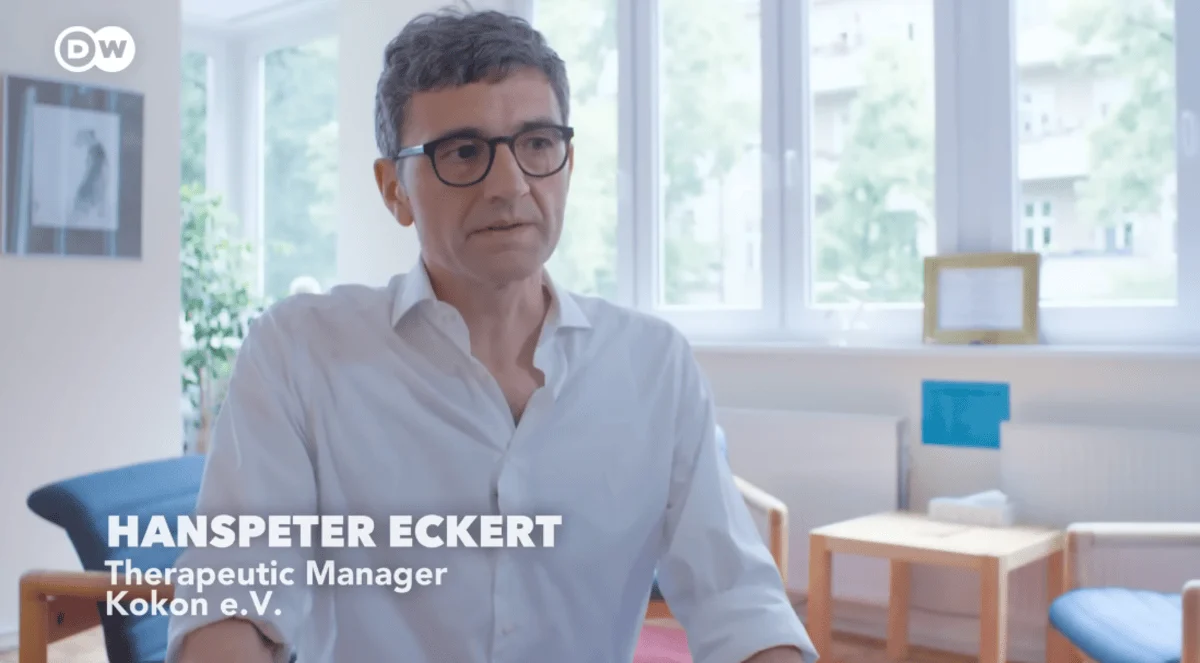
"Cocaine is so harmful because it makes you, as the person affected, dependent such that you can no longer complete tasks that are worthwhile to you, because you want to consume all the time. In those times of consumption, most female patients withdraw socially to a large degree, and are no longer reachable at all."
"From South America, cocaine travels all over the world. On its way to consumers, it can become increasingly impure and expensive. The product’s route to Europe is either direct or via Africa. There, deliveries often change hands in West African states, mostly Guinea-Bissau or Nigeria. The substance is transported by container, on ships or by air, or inside the body of a smuggler. The starting price in Colombia is around 3,000 euros per kilo; in Germany, dealers charge more than ten times that."2
"The Kenyan city of Mombasa. With the largest port in East Africa, a new drug trafficking route has recently developed here. Heroin from Asia and cocaine from Latin America now often take this route to Europe, and for good reason: The Kenyan coast is long and poorly monitored."
"This is an area with youth unemployment higher than 80 percent. The average wage is 1,050 euros a month. In just one day, smugglers can earn several thousand euros. And so, more and more young people are getting involved in the illegal drug business."
"The search for drugs is like finding a needle in a haystack. In Europe’s largest deep-water port, it’s nearly impossible to find everything despite the most modern methods. It will always be a cat and mouse game: We find drugs, then we take someone out of circulation, but then other players find new ways to smuggle the drugs into the country again. And that’s how it will always go on. What is changing is the spiral into violence. We are tracking down more and more narcotics, and this is also intensifying the resistance. The fight is getting more and more brutal as power, along with billions of euros in profits, are at stake."
"In summer 2021, a journalist became a victim of the drug mafia ... Crime reporter Peter R. de Vries dies on the sidelines of a murder trial against billionaire drug traffickers. He was a media advisor to a key witness. The murder shows that the cartels in the Netherlands will stop at nothing."
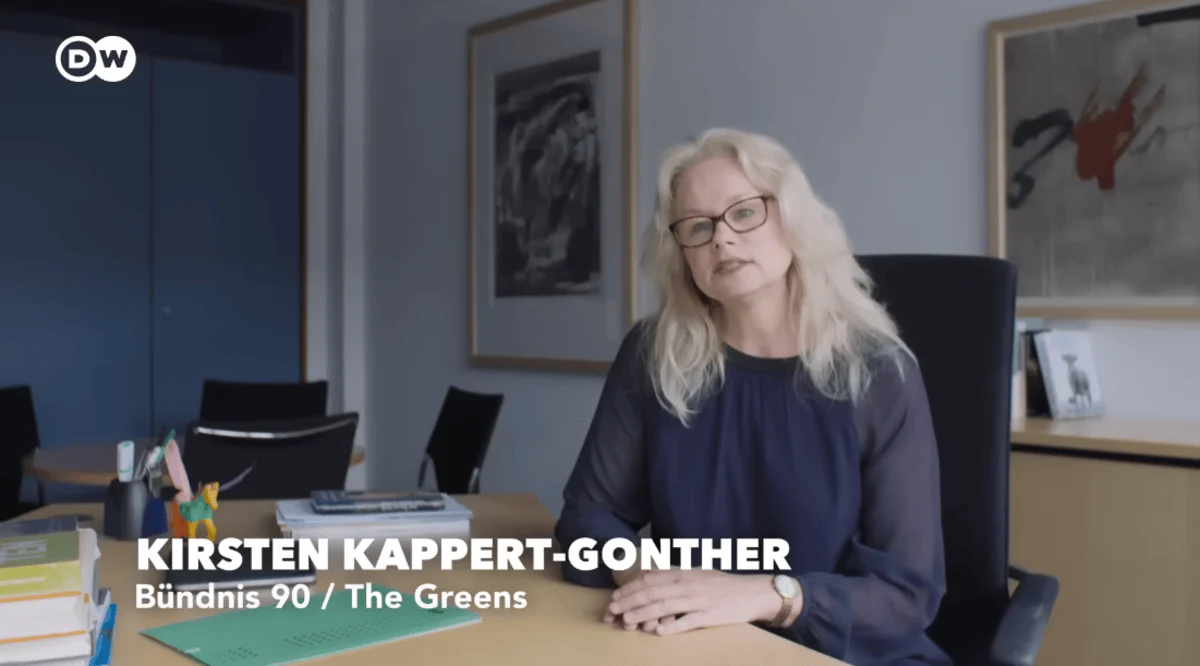
"We have a situation in which this huge flood of cocaine is no longer possible to control through checks. The security authorities, the police, the judiciary, are always behind the curve. Organized crime is extremely resourceful in finding new trafficking routes, but controls have basically failed."
"I think the development in recent years with the increasing numbers of cocaine confiscations is very dangerous. I think the best example is the Netherlands, where we see what such an open conflict can look like, in the area of drug-related crime. And, it has to be said, that's all based on cocaine. There is a lot of talk about cannabis, but ultimately cocaine has led to this brutalization because the profits are correspondingly large."
1 Recent research suggests cocaine use in Europe has expanded beyond traditional nightlife settings. Increased availability, higher purity, and stable prices have contributed to use across a broader range of social groups, including some professional environments and economically vulnerable populations.
2 The vast majority of the world's cocaine originates in the Andean region of South America—primarily Colombia, Peru, and Bolivia—and is trafficked globally through complex maritime, land, and air networks. Driven by soaring global demand, transnational criminal organizations constantly adapt their routes and methods to bypass law enforcement.
Continue Learning
Explore the topics covered in this resource with the links below. Whether you're looking for a quick overview, an in-depth article, or another video, these resources can help deepen your understanding. If there's a topic you'd like to see covered or you're looking for something specific, feel free to contact me.
Explore the topics covered in this resource with the links below. If you're looking for something specific or have a suggestion, feel free to contact me.




Share Your Review
Your perspective matters. By sharing your honest thoughts, you can help others understand what this resource is really like beyond a simple summary. Whether it resonated with you, challenged your thinking, or wasn't what you expected, your feedback helps build a more useful and transparent collection of addiction and mental health resources.
Your perspective matters and helps improve this collection of addiction and mental health resources.
There are no reviews yet. Be the first one to write one.