WASTED with Guyon Espiner
Table of Contents
Introduction
Guyon Espiner takes a closer look at New Zealand’s war on drugs through the lens of methamphetamine, a drug many New Zealanders consider to be the most dangerous. He speaks with police, Australian politicians, treatment providers, and the Drug Foundation, but the real heart of the story comes from people who’ve lived through it themselves, sharing their personal experiences and struggles.
Stepping back from these stories reveals a broader picture: good people, from police officers to customs agents and treatment providers, working within a broken system they know isn’t effective. WASTED shows the challenges of shifting from a punitive approach to a health-based one, emphasizing that decriminalization doesn’t mean doing nothing. Through programs like Te Ara Oranga and other personal accounts, Espiner highlights compassionate, evidence-based solutions that could make a real difference in Aotearoa.
More from Guyon Espiner:
Quotes
“In Whangarei, police are treating meth use as a health issue rather than a criminal one, using a programme called ‘Te Ara Oranga‘, or ‘The Path to Wellbeing’. Instead of charging meth users with possession of the Class A drug, police are referring them to health and rehab services. The programme results in a 34% drop in criminal offending by those who take part, and they tend to see the police in a different light. Te Ara Oranga is special and successful — after more than 3000 people in Northland were helped by the programme, it’s now being rolled out in towns in the Eastern Bay of Plenty.”
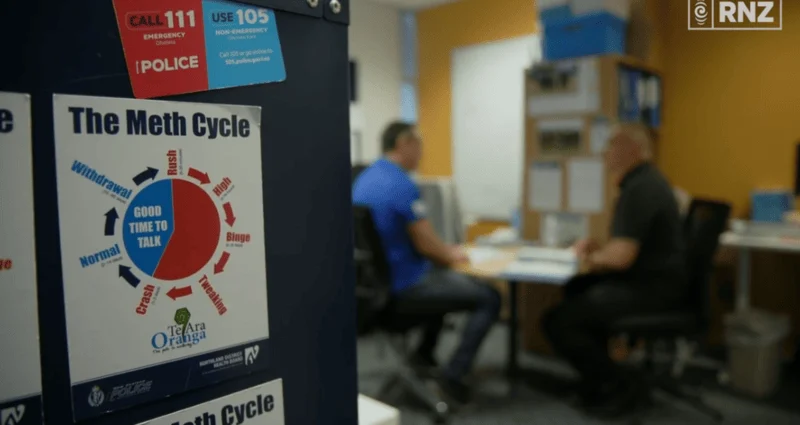
“As you read more and you begin to understand how the drug markets work and how the black market works, the prevalence of drug use and supply in wider society has persisted over decades, it forces you to think about whether the policies that we have, the enforcement that we have, is working at all … criminalising communities — generally communities that are in poverty — has failed us. I think there are a whole lot of harms that come with making criminals of people that use and socially deal drugs.”
“In 2016, the Drug Harm Index estimated that New Zealand spends about $350 million a year on drug interventions. Of that, 170 million was on courts and prisons, 100 million was on policing, and just 80 million was for healthcare. Customs spends tens of millions every year trying to stop illicit drugs entering the country. It employs more than 1500 staff and says all of those people have a role in combating drugs.”
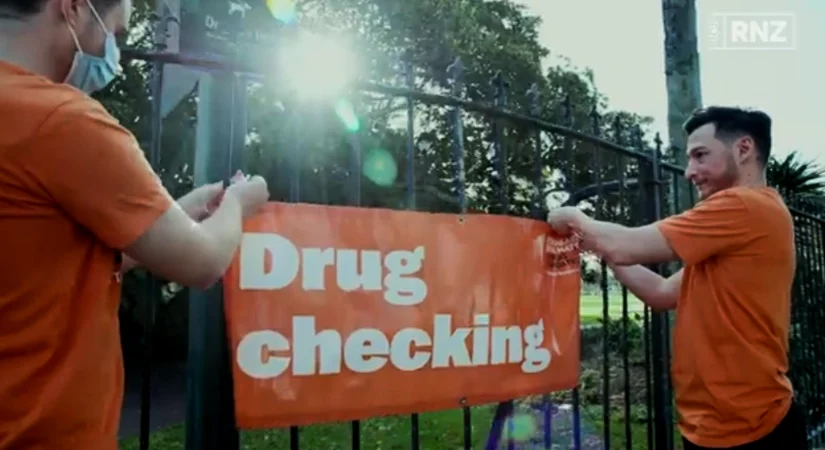
“This is a drug-checking station. These clinics are run by the Drug Foundation and Know Your Stuff. They pop up every couple of weeks in towns around New Zealand and also at music festivals and major events. Drug checking is legal now after a law change in 2021 — one of the few areas where New Zealand is taking a harm-reduction approach to drugs. This is strictly about health and science. The information cannot be used in criminal evidence.”
“New Zealand still locks people up just for taking drugs. Last year, about 3100 people were convicted for low-level drug crimes like possession and personal use. Of those, about half were Maori. In the last 10 years, 35,000 New Zealanders have been convicted of a cannabis offence, and 5500 have been sent to prison, and this hardline approach has long had political support.”
“We know that one of the significant harms associated with illicit drug use, as well as the health harms, is the criminalisation of people, and that comes from being engaged in the criminal justice system, but also the stigma associated with that and the reluctance, maybe, to seek treatment, to seek support.”
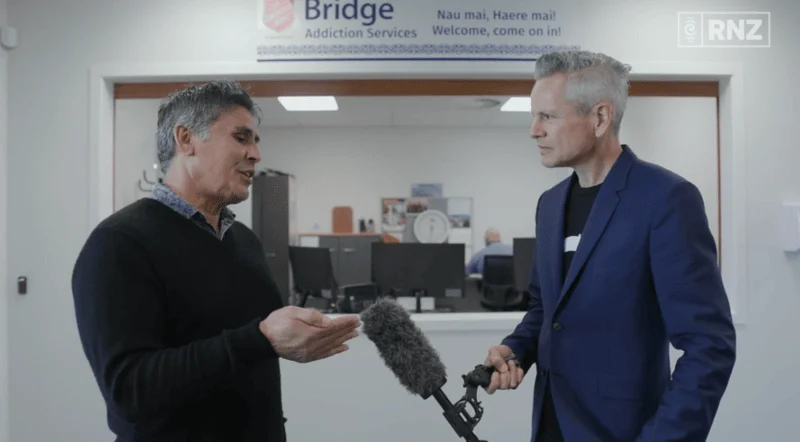
“The five-step programme is one of those offered in Whangarei by Richard Dick at the Salvation Army … it’s a service that offers some information around what’s happening to their family member and some strategies to cope with what’s happening in their family.”
“Methamphetamine is our number one drug of concern … New Zealanders consume about 16kg of meth each week … We pay top dollar for drugs — a kilo of refined meth that fetches $5000 in the US has a street value of about $160,000 in New Zealand.”
“People living in poor neighbourhoods are seven times more likely to use amphetamines than those in the wealthy areas. That’s no accident, according to a report on meth harm and rehabilitation that was done for the Ministry of Health … We are aware that, sadly, gangs will target areas that are socially deprived, so they can come into a small community where there is limited opportunity, limited education, limited incomes, and effectively take over and influence that community and actually drive levels of addiction.”
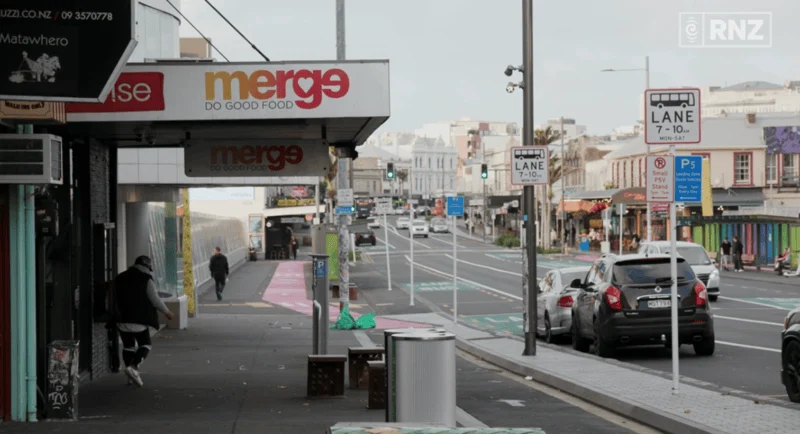
“Merge Community [PDF] is basically a place where people can come. It’s largely for our homeless community. So I have a team of people that have experienced homelessness themselves, and we create pathways for them into employment. So we build work around the people, not the people around the work. Our motto is, When you’re ready, we’re ready, and we support them on that journey right through to housing.”
Continue Learning
Share This Resource!
Share This Resource!
Brenda H.
BA Psych, Grad. Cert. Addictions & Mental Health
Driven by a deep personal connection to these topics, I created AMH Resources to bridge the gap between academic knowledge and everyday support. I watch, read, and summarize a wide range of free resources to help you navigate the overwhelming amount of information available and find what resonates with your journey.
Share Your Opinion
Your perspective matters. By sharing your honest thoughts, you provide an insight that a simple summary can’t always capture. Whether something truly resonated with you or completely missed the mark, I want to hear about it. Your input helps build a more transparent collection of tools for anyone navigating addiction and mental health topics.
There are no reviews yet. Be the first one to write one.