Through a Blue Lens
Introduction
Through a Blue Lens is a 1999 documentary from the National Film Board of Canada that offers an unfiltered look at addiction and life in Vancouver’s Downtown Eastside through the eyes of police officers who patrol the neighbourhood. Filmed by members of the Vancouver Police Department’s Odd Squad, the documentary grew out of their efforts to show young people the realities of drug use through the experiences of people living with addiction on the streets.
As officers build relationships with the people they film, several individuals share deeply personal stories of substance use, homelessness, trauma, illness, and survival. Rather than focusing solely on policing and enforcement, Through a Blue Lens examines the human lives behind addiction and the stigma surrounding it, while capturing the poverty, homelessness, crime, and public health challenges facing the Downtown Eastside.
Vancouver's Downtown Eastside
Since Through a Blue Lens was filmed, Vancouver's Downtown Eastside has remained at the centre of debates over addiction, homelessness, public health, and drug policy. In 2001, Vancouver adopted its Four Pillars Drug Strategy, built around prevention, treatment, harm reduction, and enforcement. The neighbourhood later became home to major harm reduction initiatives, including supervised consumption services, while continuing to face severe challenges related to homelessness, poverty, and the toxic drug crisis.
Additional Resources:
Share This Resource!
Share This Resource!
Quotes
"The Odd Squad Society is a group of 7 Vancouver police officers. We've all had time on The Beat and we all were motivated by seeing young people down in this area, who had absolutely no idea of exactly where they were going with their drug experimentation and drug use. It's our goal to provide young people with real-life images and information about the effects of hard-core drugs, allowing them to make their own choices about drug use."
"The drugs that I do, I don't do them because I like to do them, I do it because I'm in pain and it numbs the pain. It's a death wish – when you take drugs, all that's going to end up [happening is] either you're going to go to jail or you're going to die. Young girls, they end up on the corners to buy their dope, and the dope ends up supporting the drug dealer on the corner, the male drug dealer. Or they end up with a pimp, they end up with AIDS, which is all death wishes you know."
"We're at the intersection of Main and Hastings - this is the epicenter of what's commonly referred to as Skid Row, what most people now call Downtown Eastside. This is where the majority of our work is done, in this block as beat officers."1
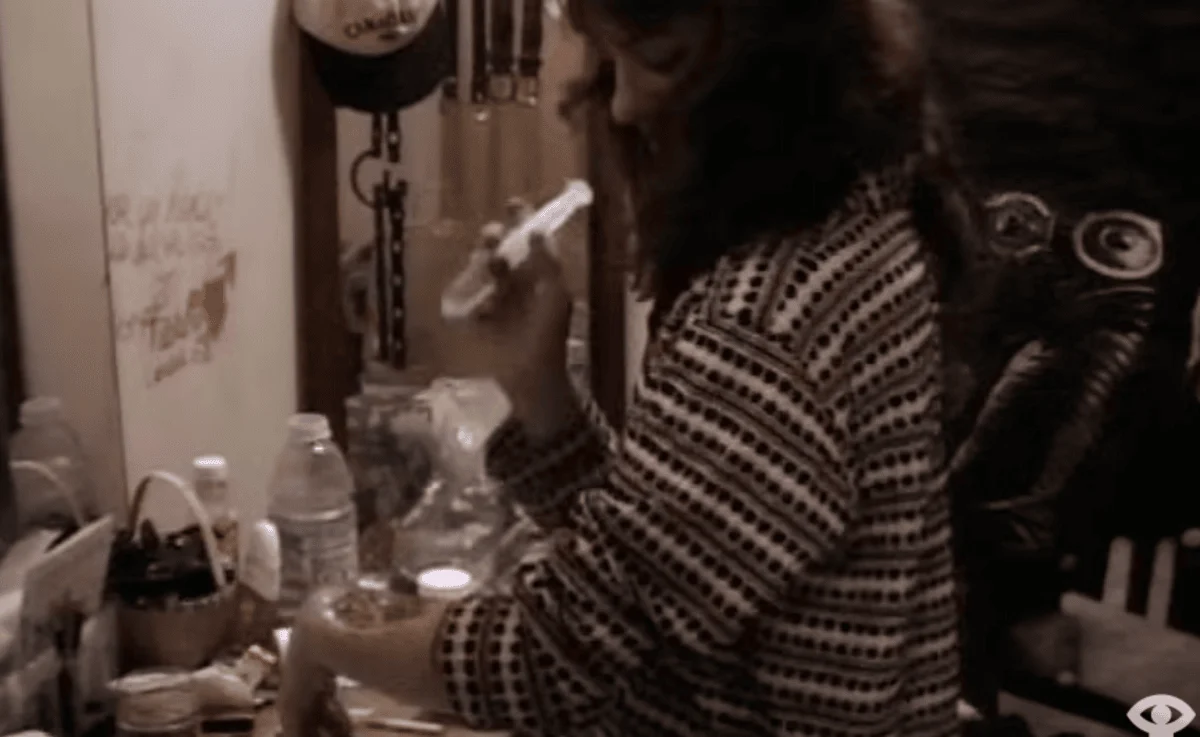
"This is from drugs that were bad and they had a strange cut in them which caused people to start hallucinating and see things. So, whenever I did drugs, things would come out of my arm and I would pick at them and pull them and that's the result of me pulling the bugs out of my arms. I've had two skin grafts on it so far. I was living down on the Skids at the time so it wouldn't take because I kept using in there .. I'd end up pulling all the skin grafts off again because I'd start seeing the bugs again."
"When I first started working down here, they were just all addicts, hypes and trash, garbage essentially. Just a waste of society's monies and taxpayers' dollars. And in a lot of sense, I don't blame people for thinking that about these people either. But when you get to know a little bit about these people and their stories, you can't help but have compassion for them."
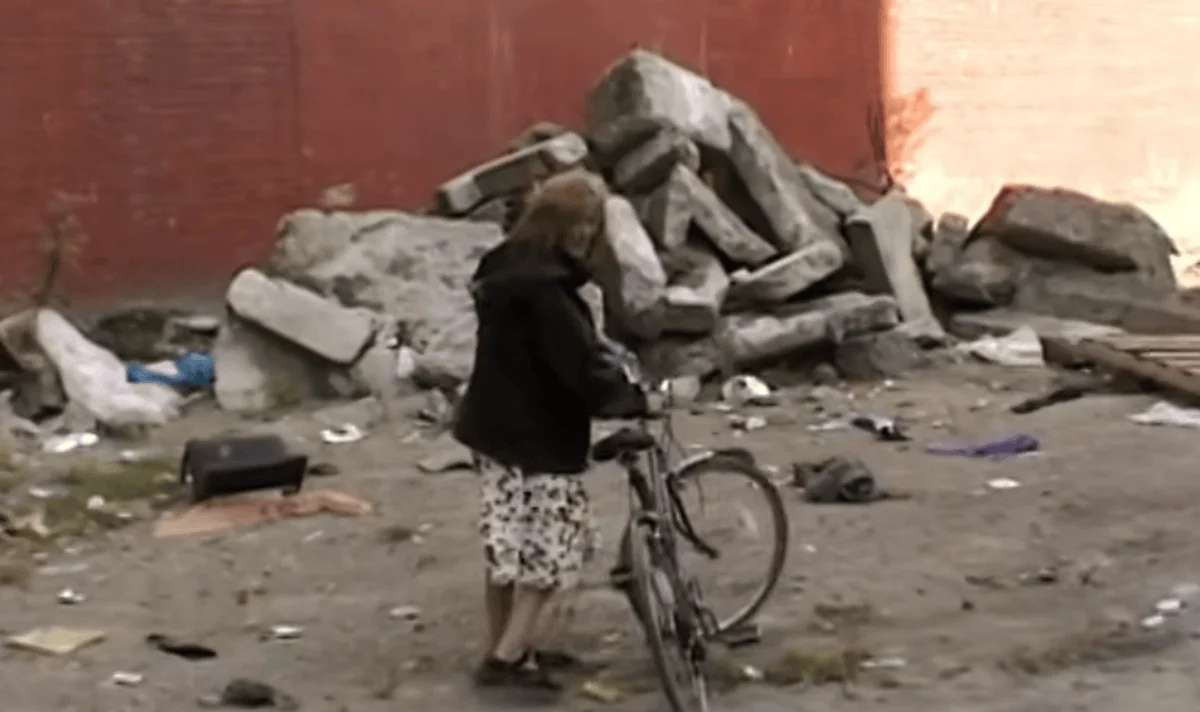
"Someone had shown her [Nicola] the upside of drugs, essentially what you see in Hollywood - the nice fancy cars, the parties, the dresses, the whole nine yards. And when this guys' use for her had worn out, she ended up supporting her habit by prostituting herself, as most women addicts do. The quality of life just keeps going down and down, from being a high-track prostitute to living in Skid Row - it's just a matter of time."2
"I don't think anything has affected me more than looking at those family pictures. I realized then that each one of the people down here has a past and they'll have futures. They may come from broken families, but a lot of people come from good, strong upbringing families. They've just made the wrong choice - they've got into drugs, they've got into heavy alcohol abuse."
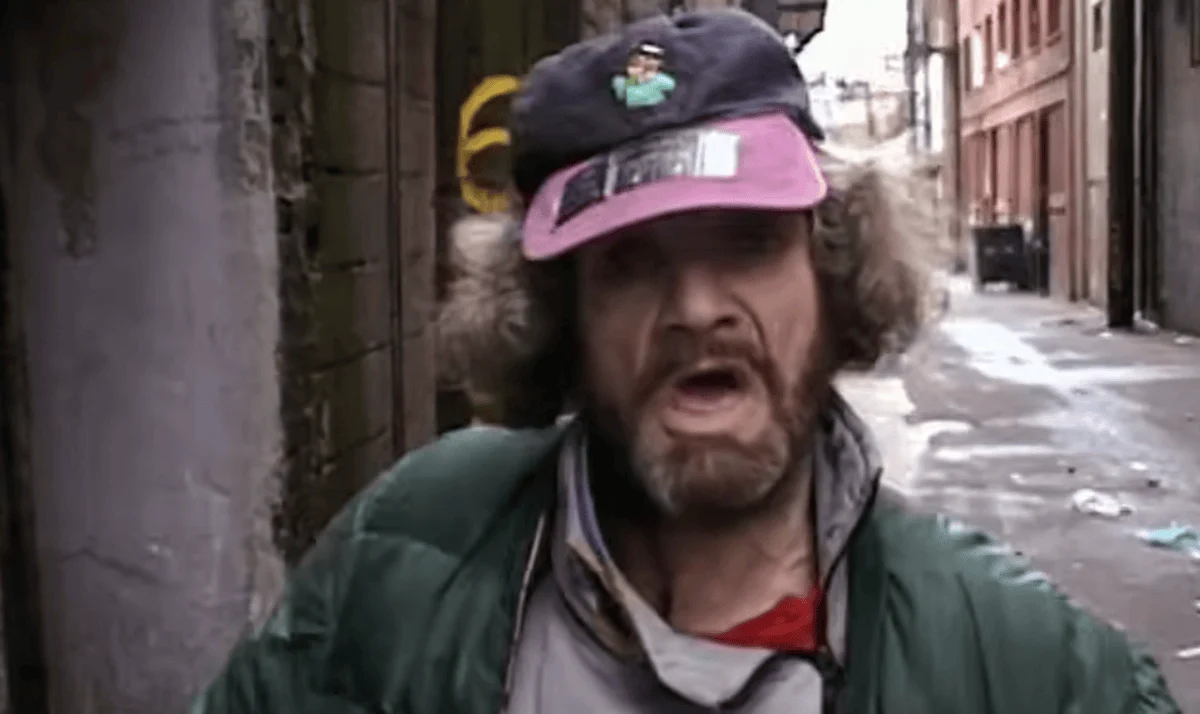
"Randy's one of our subjects. We're following him over a period of time in Skid Row here ... I'd say he's one of the oldest addicts down here, both age and length down in the area. He's been down here for probably about 10 years and he's a hardcore addict and he lives the streets and there's very few that can actually live on the streets and live with an addiction for that length of time."
"Working on this drug awareness project, you sort of become attached to the various subjects that we've chosen to chronicle down here … you have to get to know their life in detail and you realize that they're doing a wonderful service to the community by providing us access to their life and filming their hellish existence down here and talking about their sad and painful stories down here. And they have nothing to give monetarily back to the community, but this is one way that they feel they can make a difference."
"I [Nicola] certainly didn't know when I was 15 years old and somebody stuck the first needle in my arm that it was as addictive as it is. I mean, it was a joke. It was a game ... I had a 39 year old inject me with the first shot of cocaine I ever had when I was 15 years old."
1 More than two decades after this documentary was filmed, Vancouver's Downtown Eastside remains one of Canada's most economically marginalized neighbourhoods. The area continues to face high rates of poverty, homelessness, and toxic drug-related harms, while also serving as a focal point for harm reduction, housing, and public health initiatives.
2 Research has found strong links between substance use, homelessness, trauma, and survival sex work among vulnerable women. Many women involved in survival sex work report histories of childhood trauma, housing instability, and substance use disorders, though these experiences are not representative of all women living with addiction.
Continue Learning
Explore the topics covered in this resource with the links below. Whether you're looking for a quick overview, an in-depth article, or another video, these resources can help deepen your understanding. If there's a topic you'd like to see covered or you're looking for something specific, feel free to contact me.
Explore the topics covered in this resource with the links below. If you're looking for something specific or have a suggestion, feel free to contact me.






Share Your Review
Your perspective matters. By sharing your honest thoughts, you can help others understand what this resource is really like beyond a simple summary. Whether it resonated with you, challenged your thinking, or wasn't what you expected, your feedback helps build a more useful and transparent collection of addiction and mental health resources.
Your perspective matters and helps improve this collection of addiction and mental health resources.
There are no reviews yet. Be the first one to write one.