Dying by Prescription: OxyContin Controversy
Introduction
Dying by Prescription is a 2012 special report from 16x9 Global News investigating OxyContin and the growing concerns surrounding prescription opioid use in Canada. Introduced in 1996, OxyContin—a long-acting formulation of oxycodone—was heavily promoted for the treatment of pain, while misleading claims about its addiction risk helped drive widespread prescribing.
Through interviews with patients, grieving families, researchers, and medical professionals, the investigation examines addiction and overdose alongside the prescribing practices and pharmaceutical marketing that contributed to OxyContin's success. It also explores Purdue Pharma's promotion of the drug, concerns about industry influence in medical education, and the growing scrutiny surrounding the risks of prescription opioids.
OxyContin & Canada's Opioid Crisis
In the years since Dying by Prescription aired, efforts to hold pharmaceutical companies accountable for their role in Canada's opioid crisis are still unfolding. In 2022, Canadian governments reached a $150-million settlement with Purdue Pharma Canada over claims related to the sale and marketing of opioid medications, while broader litigation against other manufacturers and distributors has continued. Although today's overdose crisis is largely driven by illicit fentanyl and other synthetic opioids, researchers continue to trace its early roots to the aggressive promotion and widespread prescribing of medications such as OxyContin.
Additional Resources:
Share This Resource!
Share This Resource!
Quotes
"Michael's toxicology report found high levels of the ingredient oxycodone, found in the prescription painkillers he was prescribed, such as hydromorphone and OxyContin. Incredibly, Michael had been prescribed a cocktail of eight different prescription drugs, resulting in more than 13,000 pills in just 14 months. That works out to more than 30 pills a day."
"Dr. Dhalla and his research team recently published a study in the Canadian Medical Association Journal, noting that drugs like OxyContin are killing users in Ontario at twice the rate they were in 1991. In fact, the rate of deaths involving narcotic painkillers went from 13.7 per million in 1991 to 27.2 per million in 2004. And prescriptions for OxyContin have increased by more than 850% during the study period from 1991 and 2007."1,2
"Known as hillbilly heroin, when the drug is chewed or crushed and inhaled, it produces a rapid heroin-like euphoria. But when OxyContin was first introduced, it was promoted by its manufacturer Purdue Pharma as a safer, less addictive alternative to morphine."3

"It's the worst feeling in the world, knowing that you need something to get out of bed. I never had a problem with drugs, alcohol, or anything before I was placed on this ... I was put on this medication and became a raging addict."
"When OxyContin hit the market, it became an instant success. Finally, a drug that could relieve pain all day long. It became a wonderful alternative to addictive narcotic pain pills. Prescriptions for OxyContin soared but it wasn't long before harrowing stories of addiction, abuse and side effects began to surface."
"It is a wonderful pain medication if it is used properly. Best way to look at it is, think about a knife in the hand of a chef. He would make a wonderful meal with that knife. Give the same knife to a criminal and the outcome is totally different. The problem is not the knife, it's how and why it was used."
"A recent survey from the University of Toronto posed this question: Who in Canadian medical schools gets the most training in pain management? Doctors, Nurses, Dentists, Pharmacists, Physical Therapists, Occupational Therapists, or Veterinarians? The answer: Veterinarians got 5x more pain training compared to physicians, who got double what the nurses got."

"In a newer version of the text, all of those claims about OxyContin being less addictive and having fewer side effect are gone, and today's ads for OxyContin now warn of the potential for abuse and addiction ... In 2006, this book, Managing Pain, the Canadian Healthcare Professional's Reference, published by Purdue Pharma, suggests that the slow release formula has lower abuse potential, fewer persistent side effects, fewer peaks and valleys, than other opioids."4
"OxyContin was a big money maker for the pharmaceutical company that developed it, convincing doctors it was a safer, less addictive painkiller. But in the U.S., that company made a shocking admission – it lied, purposely misleading doctors and the public all in the name of pill popping profit."
"American court documents obtained by 16x9 reveal executives at Purdue Pharma's U.S. operation designed the misleading campaign for one purpose: to boost sales and drive profits. And there was never any proof that OxyContin, as Purdue was fond of suggesting, was any better than morphine."
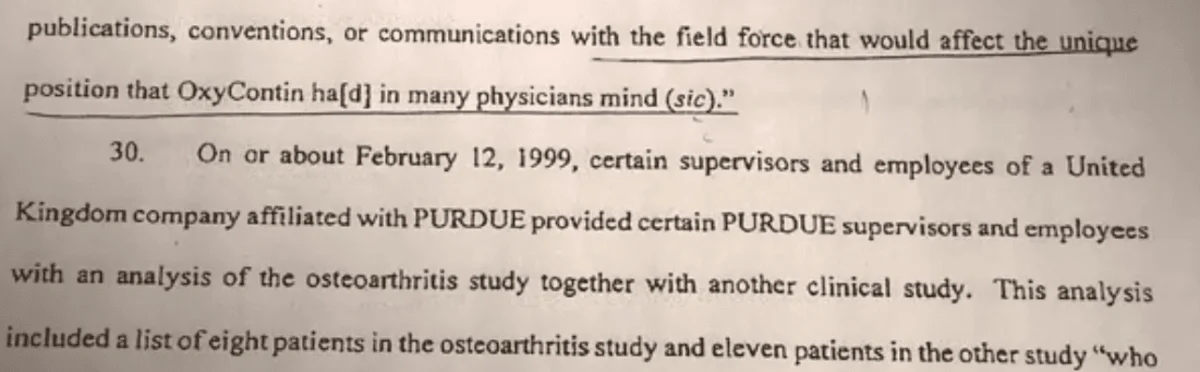
"The U.S. court documents also reveal how Purdue sales reps were trained to pitch drug: They could tell healthcare providers that OxyContin potentially caused less chance for addiction, and patients who took OxyContin would not develop a tolerance for the drug. Documents also show that even when concerns were raised to Purdue supervisors, the company did nothing because it didn't want to affect the unique position that OxyContin had in many physicians minds."
"She's on a personal mission to warn Canadians about the dangers of prescription drugs, especially the kind that killed her son. She's targeting the professional bodies that represent doctors and pharmacists. But for Ada, this is ground zero, the place where her first lawn sign will go, the spot where her 29-year-old son is buried. Ada doesn't much care whether Purdue is forced to pay a big settlement in Canada. No amount of money back bring Michael back. What she wants is something far more permanent - she wants OxyContin banned."

1 Ontario's opioid mortality rate reached its highest recorded level in 2021 before declining by more than 50% by 2025. Unlike the period discussed in this documentary, most opioid-related deaths today involve illicitly manufactured synthetic opioids rather than prescribed pain medications.
2 The rapid growth in OxyContin prescribing seen during the 1990s and 2000s has since reversed. Across Canada, prescription opioid use for pain and initiation of high-dose opioid therapy declined substantially between 2018 and 2022, while oxycodone prescribing decreased and treatment with medications such as buprenorphine increased.
3 Opioid pharmaceutical marketing, led by Purdue Pharma's 1996 launch of OxyContin, aggressively promoted long-acting opioids for chronic non-cancer pain, shifting from strict, short-term usage paradigms. Misleading tactics—including overstating safety, downplaying addiction risks, and funding biased educational materials—drove widespread prescribing, fueling a major public health crisis, resulting in exponential overdose increases, and leading to billions in corporate settlements.
4 By 2010, concerns about pharmaceutical industry influence in pain-management education had prompted curriculum changes at the University of Toronto. A review recommended that pain education be independent of industry funding, and educational materials associated with pharmaceutical companies were removed from the program.
Continue Learning
Explore the topics covered in this resource with the links below. If you're looking for something specific or have a suggestion, feel free to contact me.







Share Your Review
Your perspective matters. By sharing your honest thoughts, you can help others understand what this resource is really like beyond a simple summary. Whether it resonated with you, challenged your thinking, or wasn't what you expected, your feedback helps build a more useful and transparent collection of addiction and mental health resources.
Your perspective matters and helps improve this collection of addiction and mental health resources.
There are no reviews yet. Be the first one to write one.