Adrian Chiles: Britain's Drink Problem
Introduction
Adrian Chiles explores drinking culture in the United Kingdom in this revealing documentary, asking why the multi-billion-pound alcohol industry is allowed to "regulate itself – make up its own rules." He talks with professionals and members of the public about the impact of alcohol on the country, from rising liver transplants to confusion over standard drinks and hard-to-read warning labels. With alcohol-related deaths on the rise, the film asks why we aren't hearing more about the dangers of drinking.
Chiles also brings a personal perspective: in 2018, he realized his own drinking had reached dangerous levels, prompting lifestyle changes and a focus on conscious moderation rather than total abstinence. Through smaller drinks, alternating with water, and lower-strength options, he reduced his intake and improved his health. In this documentary, as in his book The Good Drinker and Drinkers Like Me, Chiles highlights how even non-alcoholics can fall into high-risk drinking patterns, offering practical insight and compassion for anyone rethinking their relationship with alcohol.
Additional Resources:
Share This Resource!
Share This Resource!
Quotes
"It's not just these new low-risk drinking guidelines that the industry refused to embrace, it's also opposed proposals designed to tackle the link between low prices and alcohol harm in England. Alcohol is now more affordable than it's been at any time in the last 30 years, often costing little more than soft drinks."1
"Some products on the shelves don't actually provide health information on the label, but they advise customers to visit an alcohol producer or industry website for information. It's an unreasonable assumption, especially in crowded shops and supermarkets, are going to check up websites every time they purchase an individual drink. Currently, there is no mandatory regulation around health information, units, and guidelines on alcohol products in the UK. It's entirely self-regulated by the alcohol industry."2
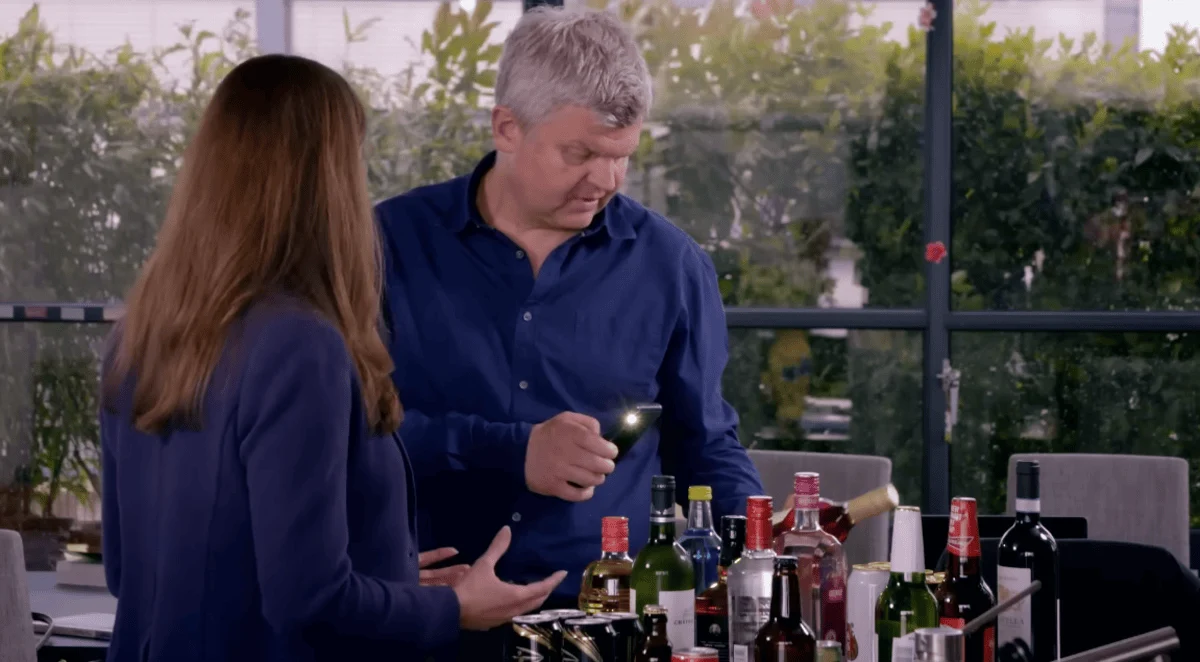
"Why is it that we understand public health messages like eating 5 a day and stopping smoking, but never quite get our heads around what doctors say is a safe level of drinking? Why don't alcohol producers spell out what the guidelines are?"
"Cameron proposed something called Minimum Unit Pricing (MUP). The thinking was that this could push up the price of the cheapest booze, the booze often associated with problem drinking. It was a proposal welcomed by many in the medical profession."
"It's a tax which is focused on really heavy drinkers. Most people will not drink white cider; they simply won't drink it at 16 pence a unit. Well, if that goes up to 50 pence a unit, that's a three-fold increase in price that's going to have a very marked impact on their behaviour … MUP is the most effective way to reduce alcohol-related harm."3
1 Data indicates that alcohol has become significantly more affordable in the UK over the past 30 years, with alcohol in 2023 roughly 121% more affordable than it was in 1987. While the "cost-of-living crisis" has driven up prices, alcohol affordability has remained high in historical terms because incomes have risen faster than alcohol prices over the long term.
2 Based on July 2025 announcements, the UK government is moving to end the era of purely self-regulated alcohol labelling, shifting toward mandatory requirements as part of its 10-Year Health Plan. While voluntary codes previously dominated, the government has announced plans to introduce mandatory labelling for nutritional information and health warning messages.
3 The primary source for this finding is the independent evaluation of Scotland's MUP policy, which synthesised over 40 research papers to assess its effectiveness after 2.5 years of operation. The evaluation found that MUP directly contributed to a 13.4% reduction in deaths wholly attributable to alcohol and a 4.1% reduction in hospital admissions.
Continue Learning
Explore the topics covered in this resource with the links below. Whether you're looking for a quick overview, an in-depth article, or another video, these resources can help deepen your understanding. If there's a topic you'd like to see covered or you're looking for something specific, feel free to contact me.
Explore the topics covered in this resource with the links below. If you're looking for something specific or have a suggestion, feel free to contact me.







Share Your Review
Your perspective matters. By sharing your honest thoughts, you can help others understand what this resource is really like beyond a simple summary. Whether it resonated with you, challenged your thinking, or wasn't what you expected, your feedback helps build a more useful and transparent collection of addiction and mental health resources.
Your perspective matters and helps improve this collection of addiction and mental health resources.
There are no reviews yet. Be the first one to write one.