Inside America's Largest Open-Air Drug Market
Introduction
Peter Santenello creates "videos about a world the media fails to capture"x. In this documentary, he travels to Kensington, Philadelphia to meet Buddy Osborn, a longtime community leader who reached out to share the realities of one of America's largest open-air drug markets. Through Buddy's perspective, viewers witness the devastating impact that addiction, drug trafficking, and public disorder have had on residents, families, and especially the children growing up in the neighbourhood.
Alongside documenting the crisis, the film highlights the work of The Rock, the organization Buddy founded to help people access treatment while providing local youth with a safe, supportive alternative to crime, drugs, and violence.
Share This Resource!
Share This Resource!
Quotes
"We'll show you McPherson Square. They also named it Needle Park, which is heart-wrenching because it's really the only place in Kensington where you have an open space."
"Kensington right now is a tourist attraction for people to come and look and see people dying on the streets. And the truth of the matter is they don't have to die on the streets because there is help … [but] it takes 17 times. You get refused 17 times. That's the average number before somebody wants to reach out for help, when somebody wants to accept the help."1
"No child should be able to see what they see here. A kid was not born to look at what they see. You got so many kids that are locked behind in houses. They just can't come out and enjoy their life. They can't because they're locked behind in the house because of the post-traumatic stress disorder they've developed because of what they've seen over the years. It's horrible."
"If someone is in agreeance with these policies, please explain how that is compassion, seeing someone passed out with flies on their wounds and letting them rot on the streets."
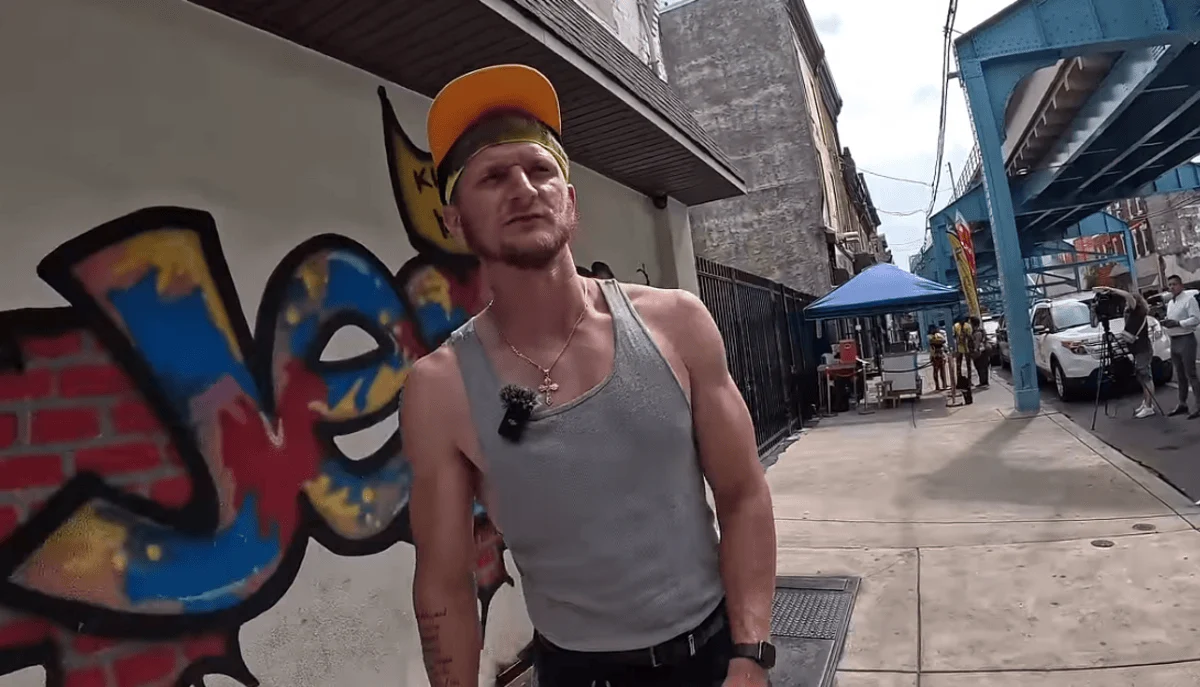
"When you allow accountability to come into your life … Now you gotta look at your own heart and you gotta say, what's wrong and what's right? What do I gotta stop? What do I gotta do? What do I gotta give up and what do I gotta step into? I had to do that myself."
"You saw how many people, that was just a handful. There's dozens and dozens of those examples that you saw laying all over Kensington. That's somebody's mother, that's someone's father, someone's daughter, someone's son. It's a family member. There's gotta be some stringent rules that have to be put in place and then they have to respect it."
"People have the wrong idea about what a rehab actually is. When they go into rehab, they learn about what sent them there in the first place, the dopamine responses, the chemical imbalances, all the technical stuff like that, but where they really learn how to recover."2
"These kids could be standing on the block – moving rock, selling drugs. And now they're here at a safe haven, safe refuge for these kids."
"Here's how it works. When you want to get right, you want to get well, we'll give you a shower. We'll put clothes on their back and then we'll get 'em to a hospital. We'll get 'em to a detox. We'll get 'em to a treatment place. We use it [donations] to get people to detox, plane fares, bus fares. Every cent that comes from this tent, that's a benevolence fund."
1 Research indicates that the average person with a substance use disorder requires multiple attempts to achieve long-term recovery, often with a median of 2 serious recovery attempts. While the commonly cited statistic that 7 or 8 attempts are needed is a myth, addiction is a chronic disease requiring persistent, managed care.
2 Psychoeducation groups assist recovery by explaining addiction's impact on the brain, teaching methods to restore dopamine balance, and developing healthy coping strategies to manage stress/anxiety and prevent relapse. These groups promote brain recovery and long-term sobriety through cognitive behavioral techniques, mindfulness, and lifestyle changes.
Continue Learning
Explore the topics covered in this resource with the links below. Whether you're looking for a quick overview, an in-depth article, or another video, these resources can help deepen your understanding. If there's a topic you'd like to see covered or you're looking for something specific, feel free to contact me.
Explore the topics covered in this resource with the links below. If you're looking for something specific or have a suggestion, feel free to contact me.


Share Your Review
Your perspective matters. By sharing your honest thoughts, you can help others understand what this resource is really like beyond a simple summary. Whether it resonated with you, challenged your thinking, or wasn't what you expected, your feedback helps build a more useful and transparent collection of addiction and mental health resources.
Your perspective matters and helps improve this collection of addiction and mental health resources.
There are no reviews yet. Be the first one to write one.