The Story Behind: Fentanyl (3 Part Series)
Introduction
This three-part series presented by RogersTV examines the opioid and fentanyl crisis and its impact on communities across Ontario, Canada. The first video provides background on fentanyl, its growing presence in communities, and the public health response surrounding addiction, prevention, treatment, and enforcement. A local police officer stresses that "the misuse and abuse of fentanyl is a shared responsibility — it’s a public health issue that involves education, intervention, treatment, and enforcement."
Parts two and three expand on these issues through personal stories from people directly affected by addiction, alongside insights from healthcare workers, law enforcement, and other experts. The series explores the role of prescription opioids in the evolving drug crisis, the challenges people face when seeking treatment, and the importance of harm reduction.
Together, The Story Behind: Fentanyl offers a closer look at addiction and the fentanyl crisis through both firsthand experiences and the people working to address its impact across Ontario.
Ontario Resources:
Share This Resource!
Share This Resource!
Quotes
"It's important to have open conversations in the home and to start those conversations early … make sure the door is open, that our kids can come and talk to us no matter what. Make sure that our kids know that if they get in to trouble or start to notice that this is an issue for them, that they have somewhere to go and someone to talk to."
"For a good 5 years of my life, I was addicted to prescription pills, other drugs along the way for sure, but nothing got me as bad as the prescription pills did … Someone had offered it [fentanyl] to me like it was a good time, like anyone else would offer you a coffee – that normal. That was the day that changed me."
"According to statistics from the Office of the Chief Coroner, deaths attributed to fentanyl in Ontario doubled between 2008 and 2012 from 45 to 116."1
"In the 2012 Canadian Alcohol & Drug Use Monitoring Survey, approximately 410,000 Canadians reported abusing prescription drugs like opioid pain relievers."2
"One pound of fentanyl at 95% purity represents enough to create 250,000 lethal doses."
"Opioid misuse is the third leading cause of accidental death in Ontario."
"Between 2011 and 2013, a fentanyl-implicated death occurred in Ontario about every 3 to 4 days."3
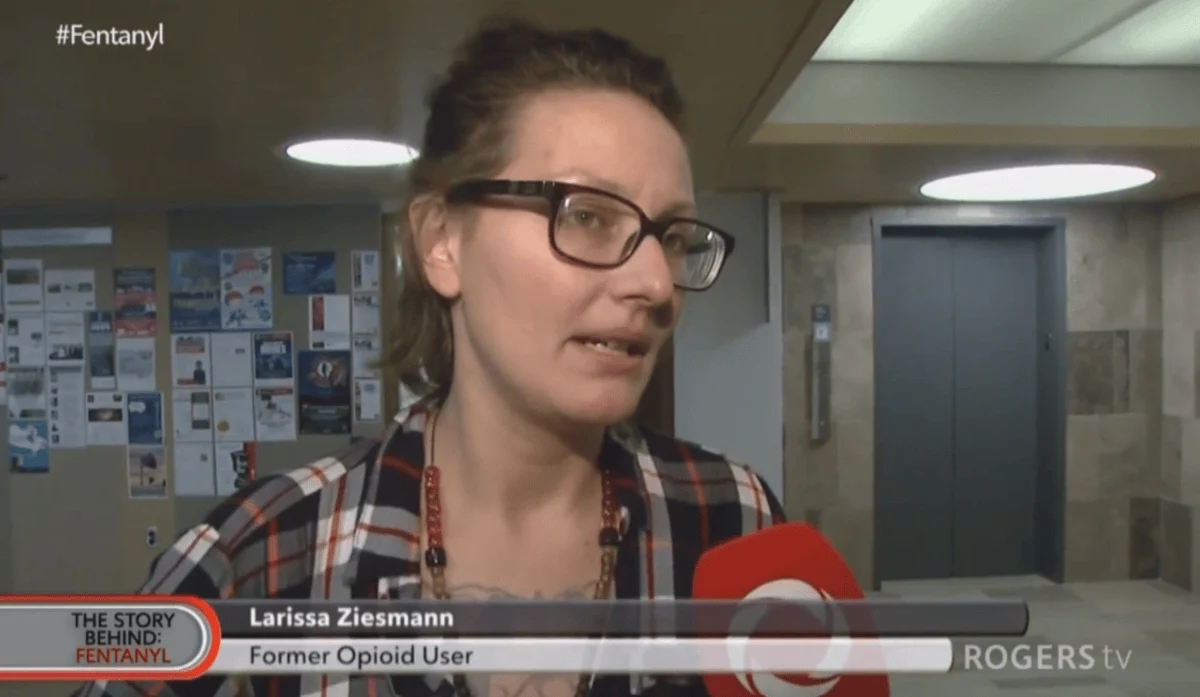
"People have been told for years to leave the person that is in addiction … it's important that people still walk beside somebody with addiction. It doesn't mean that you have to enable them, it doesn't mean that you have to put up with the negative parts of it, but to leave somebody? I don't think that there's another disease that people have that you're forced to do alone."
"Signs of an overdose may include one or more of the following: the person is unresponsive or won't wake easily; their lips and fingernails turn blue; the skin is cold and clammy."
"Fentanyl was designed with good purposes in mind. It has very important therapeutic uses, especially for chronic cancer patients. Unfortunately, when it gets into the wrong hands or when it's not administered in a therapeutic setting, in a clinical setting, then it's extremely dangerous."
"The Fentanyl Patch 4 Patch Return Initiative has been established for the purpose of public education and awareness regarding the risks of fentanyl misuse and abuse."
"A harm reduction approach requires us to dig a little deeper with that client, to understand what has transpired in that person's life, begin to unpack that and then build supports to help them work through that."4
1 The sharp increase in fentanyl-related deaths described in the documentary reflected the early stages of Ontario's opioid crisis. More recent data from Ontario's Office of the Chief Coroner shows opioid-related deaths in the province declined by 54% in 2025 compared to the peak in 2021, though mortality rates remain significantly higher than pre-crisis levels and continue to disproportionately affect Northern Ontario communities.
2 The Canadian Alcohol & Drug Use Monitoring Survey (CADUMS) has since been replaced by newer national surveys, including Health Canada's Canadian Substance Use Survey (CSUS). Recent CSUS data found that 13% of Canadian adults and 10% of youth and young adults reported pharmaceutical opioid use within the previous 12 months.
3 The scale of the fentanyl crisis has escalated substantially since the 2011–2013 period referenced in the documentary. Public Health Agency of Canada data reported more than 4,100 apparent opioid toxicity deaths nationally during the first nine months of 2025 alone, with Ontario accounting for a significant share of cases and fentanyl involved in most opioid-related deaths.
4 Harm reduction is grounded in a set of public health principles that emphasize pragmatism, respect, and human rights. It recognizes that drug use exists across societies and focuses on reducing harm rather than eliminating use entirely. Core principles include meeting people where they are without requiring abstinence, providing non-judgmental and voluntary services, prioritizing individual health and well-being, and involving people who use drugs in the design and delivery of policies and interventions that affect them.
Continue Learning
Explore the topics covered in this resource with the links below. Whether you're looking for a quick overview, an in-depth article, or another video, these resources can help deepen your understanding. If there's a topic you'd like to see covered or you're looking for something specific, feel free to contact me.
Explore the topics covered in this resource with the links below. If you're looking for something specific or have a suggestion, feel free to contact me.









Share Your Review
Your perspective matters. By sharing your honest thoughts, you can help others understand what this resource is really like beyond a simple summary. Whether it resonated with you, challenged your thinking, or wasn't what you expected, your feedback helps build a more useful and transparent collection of addiction and mental health resources.
Your perspective matters and helps improve this collection of addiction and mental health resources.
There are no reviews yet. Be the first one to write one.