Killer High: The Silent Crisis
Introduction
Killer High: The Silent Crisis explores the growing impact of fentanyl and opioid addiction on young people in Fresno, California. Through the stories of grieving families, law enforcement, and medical professionals, the film shows how quickly addiction and overdose can devastate a household—often before parents even realize something is wrong.
The film places particular focus on parents who have lost their children to fentanyl poisoning, sharing their experiences in hopes of warning other families about the risks facing young people. Alongside their stories, frontline workers discuss what they are seeing in Fresno and the importance of education and awareness in responding to the fentanyl crisis.
Killer High: Youth
Youth overdose deaths rose sharply between 2018 and 2020, with synthetic opioids like fentanyl playing a major role. Many young people were unknowingly exposed through counterfeit pills and contaminated substances, including drugs circulating on social media. While recent data shows some stabilization in youth overdose trends, fentanyl remains a leading driver of fatal overdoses among adolescents and young adults, making prevention and early intervention critical.
Additional Resources:
Share This Resource!
Share This Resource!
Quotes
"The pandemic has created another health crisis – mental health professionals say they're seeing a significant rise in substance and alcohol abuse linked to COVID."1
"Fentanyl is an opioid medication that is most frequently used in hospitals for controlling people's pain. It's a very strong opioid pain medication, whereas heroin is natural. That means it comes from the plant, the opium poppy. Fentanyl is purely made in a lab so there's nothing natural about it."
"It's one of the best highs out there ... These are drugs that are wonderful and that is what is scary about it. I've heard kids say, I never want to not feel like this again. That's a powerful statement. The other statement is, I've seen God."2
"Fentanyl in itself is predominately in a powdered format. It can certainly be ingested in a powder format. What we are seeing, majority wise, is in the form of counterfeit medication: M30 pills, often called Blues. It's made to be and look like a counterfeit Percocet pill."
"The Fentanyl Overdose Resolution Team (FORT) is a multi-agency taskforce that responds exclusively to fentanyl-related overdoses in Fresno County."
"Drug dealing all about money, and the amount of profit to be made off fentanyl is enormous. For a transnational drug cartel, these pills maybe cost them pennies on the dollar, 50 cents to make. Here, these pills are going anywhere between 25-30$ for one pill, so as you can see, the profit margins are huge."
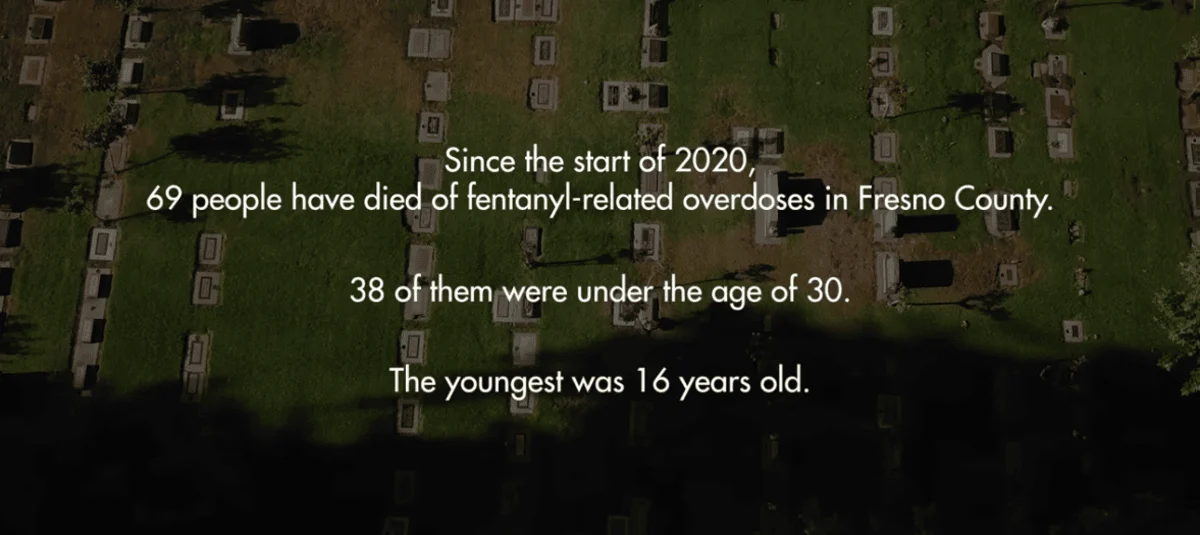
"There are high school and younger age kids that seek out fentanyl. They know exactly what it is, they know exactly what high it gives them and that's what they crave, that's what they want, and that's what they're going after."
"It was an argument to get him to come out of his room and engage with the family and unplug from social media. It got to the point of expulsions and then we realized that drugs were becoming a bigger part of our lives, something that we never thought that we would have in our life."
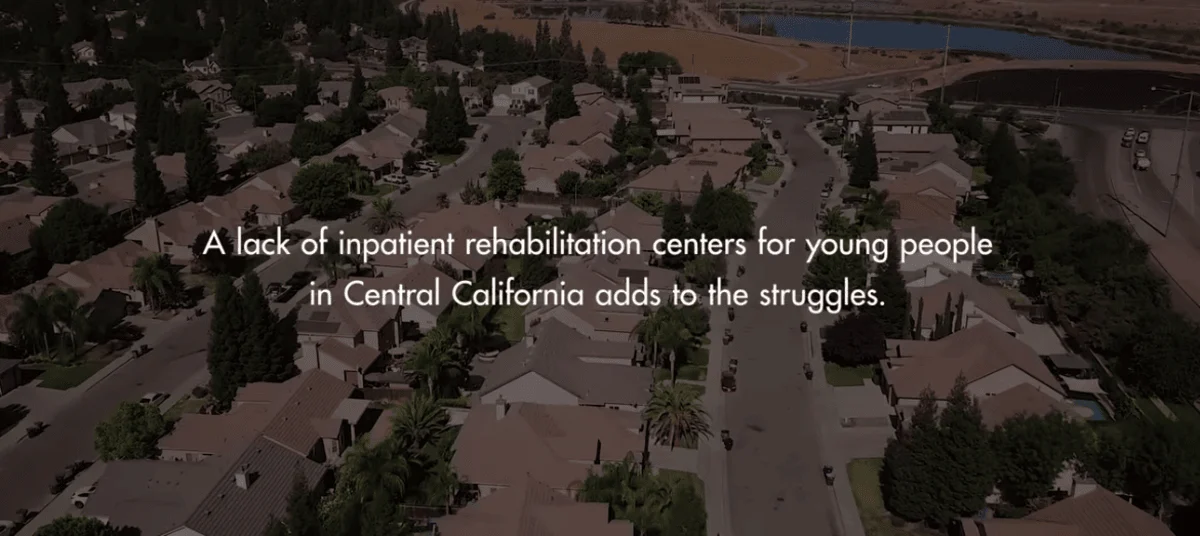
"This is part of the problem for adolescents - there are no programs in this area. It's very, very hard to find placement for them that is residential."
"More kids die two doors down and in their own beds from mom and dad than they do on the streets. That's where we're finding them – with their headsets still on, Xbox going, eyes rolled back in their head and a white foamy substance coming out of their mouth. And at that point they are gone."
"Our [Parents & Addicts in Need] hope there is that these parents come out of there knowing that they're not alone. Most families think they're the only family that is going through this and they're not. There are more families going through this than anybody realizes."
"There is such a high volume of this substance that we cannot police or prosecute out way out of this crisis. We have to educate people."
"Narcan is an opioid reversal agent ... It is strictly a nasal spray. It will bring them out of their opioid overdose if you get to it in time ... It is definitely a life-saving tool that every family needs to have in their house, but a lot of people don't want it because they don't want the stigma of somebody else seeing it in their house and thinking that somebody's a drug addict."
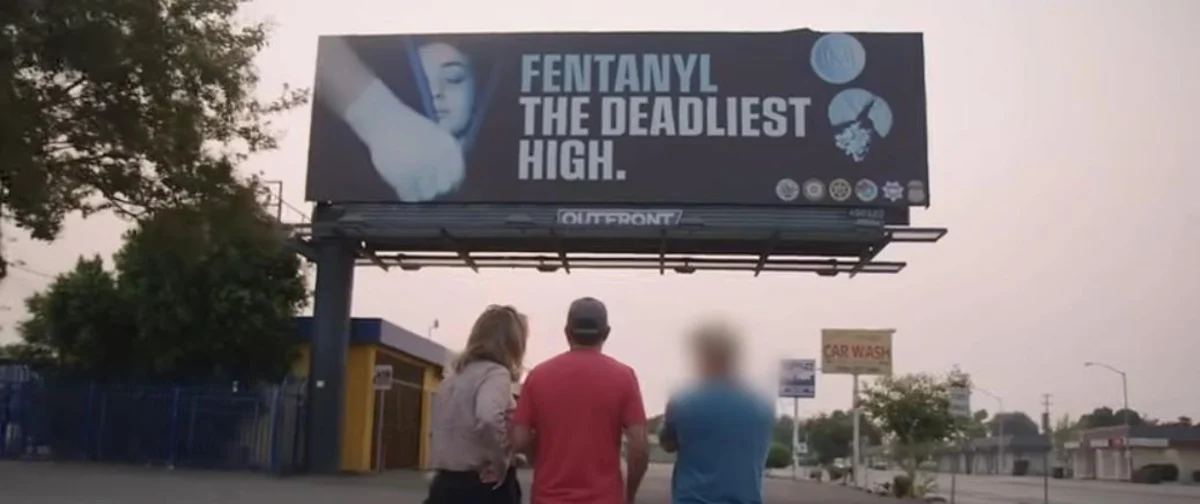
"This is our way of trying to let the public know what's going on ... if one board saves one life, I guess then, you know, it's all worth it."
"You always question, What could I have done better? What should I have seen sooner? What should I have intervened on faster? I ask myself that every day. If anything, I would trade places with them and never have them go through this."
"We all want to be validated on the good work that we believe we're doing, so the sense of validation that we receive from the likes of families, of victims, it just gives kind of the concrete resolution to us that we are making a difference, we are being impactful and we're on the right track."
1 During the COVID-19 pandemic, researchers reported sharp increases in overdose deaths and substance use across the United States. Contributing factors included social isolation, economic stress, disrupted treatment access, and worsening mental health conditions, while CDC survey data found that 13% of Americans reported starting or increasing substance use as a way of coping with pandemic-related stress.
2 Adolescents are particularly vulnerable to addiction because the brain's reward system develops earlier than regions responsible for impulse control and decision-making. Researchers have found that addictive substances can overstimulate dopamine pathways in the developing brain, increasing the risk of long-term substance use disorders.
Continue Learning
Explore the topics covered in this resource with the links below. Whether you're looking for a quick overview, an in-depth article, or another video, these resources can help deepen your understanding. If there's a topic you'd like to see covered or you're looking for something specific, feel free to contact me.
Explore the topics covered in this resource with the links below. If you're looking for something specific or have a suggestion, feel free to contact me.



Share Your Review
Your perspective matters. By sharing your honest thoughts, you can help others understand what this resource is really like beyond a simple summary. Whether it resonated with you, challenged your thinking, or wasn't what you expected, your feedback helps build a more useful and transparent collection of addiction and mental health resources.
Your perspective matters and helps improve this collection of addiction and mental health resources.
There are no reviews yet. Be the first one to write one.