DOPESICK: Fentanyl's Deadly Grip
Introduction
In 2015, nearly 300 people in Alberta lost their lives to fentanyl, with many of these fatalities linked to counterfeit, non-pharmaceutical pills.1 DOPESICK: Fentanyl's Deadly Grip offers an intimate and immersive look into the fentanyl crisis in Canada, told through the lens of a community of drug users.
One story, in particular, stands out. Throughout the documentary, viewers follow a young man who repeatedly tries to access treatment, only to encounter barriers at every turn. In one scene, he visits a publicly funded treatment centre, desperate for help, but is told he cannot begin the program until he has been sober for five days—forcing him to endure withdrawal while homeless and alone. Later, when he seeks help again, he is told the waitlist is several months long. One of the last things he says is, "Honestly, if I can't get clean at this point, I think I'll just kill myself. I can't do this anymore." His story is a heartbreaking reminder that when people are ready to seek treatment, timely access to care can make the difference between life and death.2
Additional Resources:
Share This Resource!
Share This Resource!
Quotes
"Fentanyl is a pharmaceutical drug in the class of drugs called opiates. Initially it was used in the 1960s for severe pain and operative procedures, and now you start to see fentanyl used for chronic pain patients who have pain from a whole variety of conditions. The fentanyl we're seeing on the street though is illicitly prepared fentanyl most likely from China."3
"One of the most primitive parts of the human brain is where we sense and seek reward – food, fluids, fun, and reproduction. And the chemical in our brain that increases when we have a rewarding experience is dopamine. When you eat something that you enjoy you get a dopamine surge in your brain. It reinforces that so you look for that stimulus again. The response to drugs of abuse are orders of magnitude more in terms of dopamine. So, this is why it's very common that we see patients who have addictions. They're always, always, always looking for the reward of the addictive substance. That's not a will issue; that's a neurochemical issue."
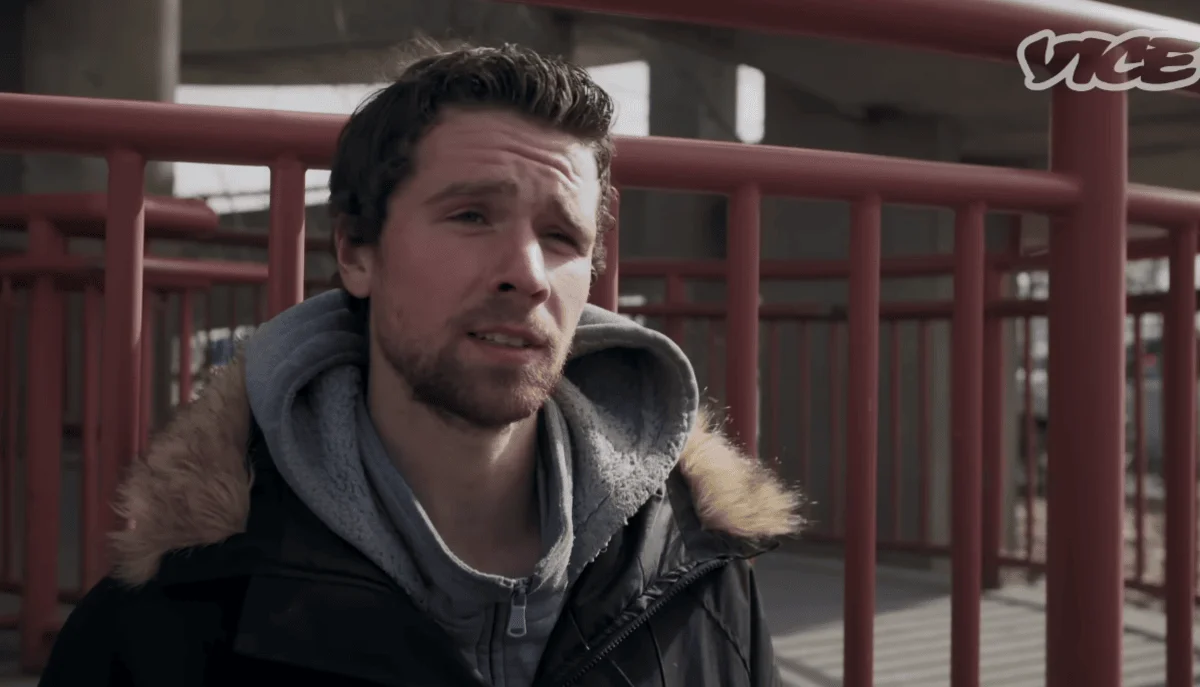
"I'd rather die than go through the pain of withdrawals of these pills. But once you do a pill you feel relaxed, you can function and you can go through your day. You can ... be normal."
"We [Blood Tribe Police] have a mandate to focus on families that are affected by drugs and harboring drug dealers, and we're tasked to go in and shut these homes down … We certainly wanna hold the people that are profiting from the sale of fentanyl accountable, but at the same time, recognize that we need to support the addicts who are addicted to fentanyl."
"When we say that fentanyl is 100 times as toxic as morphine, what we're saying is that a pound of fentanyl is the same as 100 pounds of morphine or about 50 pounds of heroin. So, if you're a drug trafficker you can move a million doses of fentanyl in a shoe box or in a glasses case, compared to requiring a skid for morphine."
"The homes are owned by the reserve, so they've been given a Band Council Resolution, which is a legal document from the Chief in Council that says, if there's suspected drug use and harboring and dealing from residents, that they can make entry into that house."

"I'm scared that I'm gonna do too big of a line but I just wanna do it. And I don't know how to fix that."
"I don't think it's an exaggeration to say that Canadian doctors' prescribing of opiates over the last couple of decades has really had a substantial role in determining this opiate addiction problem that we have here. We prescribe opiates for minor pain conditions; we prescribe opiates long-term for chronic pain conditions. And I have a really hard time believing that Canadian people, patients, feel pain differently than their counterparts in other parts of the world."4
"Naloxone is the antidote for an opiate overdose … what happens when somebody overdoses on an opiate is, the part of your brain that tells your lungs to breathe turns off. Because they're not breathing on their own, it's really important to establish an airway for them and the way you ventilate them is, you use this mask you plug their nose, and you blow into their mask. If they don't come to, that's when you're gonna use naloxone."
"The effective treatments that we have are essentially medication-assisted treatment with long acting synthetics opiates, or partial opiates like methadone and Suboxone. It's a medication that the patient will take everyday. It just keeps them from having cravings and withdrawals, and it's shown to help their social function, family relationships, decrease in the involvement with criminal activity and such. When we get them on treatment, it's almost as though there's a complete awakening."
"I work [at the Dream Center] as an operational support worker and I help take care of the guys and when they're struggling, they come to me and I relate and we talk about it and we go through our problems together .. I just let them know the same thing that I learned that day is that you do matter and that it is possible to have people care about you."
1 In 2015, Alberta experienced a dramatic spike in fentanyl-related fatalities, with reports indicating approximately 270 to 300 deaths linked to the drug that year. This surge represented a more than 75% increase over the previous year, largely driven by the circulation of counterfeit, illicitly manufactured pills which were marketed as legitimate medication but actually contained high doses of fentanyl.
2 Addiction treatment in Canada faces significant delays, with wait times for residential, publicly funded programs often ranging from weeks to several months, and in some cases, up to a year or more. A 2024 report indicated that 1 in 10 people waited 143 days or more for community mental health and substance use counseling.
3 Illicit fentanyl supply chains are complex and have evolved over time. While China has historically been a major source of precursor chemicals used to manufacture fentanyl, production has increasingly shifted to domestic laboratories in Canada and transnational networks involving multiple countries, including Mexico and India.
4 The opioid addiction epidemic in Canada is a complex, multi-stage public health crisis that emerged from a massive increase in prescription opioid usage in the 1980s and 1990s, evolving into a crisis now dominated by illegal, highly toxic synthetic drugs. Between January 2016 and March 2021, over 22,800 Canadians died from apparent opioid toxicity.
Continue Learning
Explore the topics covered in this resource with the links below. Whether you're looking for a quick overview, an in-depth article, or another video, these resources can help deepen your understanding. If there's a topic you'd like to see covered or you're looking for something specific, feel free to contact me.
Explore the topics covered in this resource with the links below. If you're looking for something specific or have a suggestion, feel free to contact me.





Share Your Review
Your perspective matters. By sharing your honest thoughts, you can help others understand what this resource is really like beyond a simple summary. Whether it resonated with you, challenged your thinking, or wasn't what you expected, your feedback helps build a more useful and transparent collection of addiction and mental health resources.
Your perspective matters and helps improve this collection of addiction and mental health resources.
There are no reviews yet. Be the first one to write one.