Injecting Hope: Tackling Drug Overdose with Harm Reduction
Introduction
Injecting Hope examines the ongoing drug overdose crisis in Vancouver, British Columbia, and how harm reduction services are being used to save lives and connect people with healthcare and support. Produced by ABC7 News in San Francisco, the documentary follows reporter Tara Campbell to Vancouver’s Downtown Eastside, home to Insite, North America’s first legally sanctioned supervised consumption site, to examine Canada’s approach to the overdose crisis.1
Through expert insights and personal stories, the documentary explores supervised consumption, the impact of fentanyl on the illicit drug supply, and the complex circumstances that often surround substance use, including trauma, homelessness, poverty, and barriers to healthcare and treatment. Injecting Hope also confronts the stigma surrounding people who use drugs and the debate over harm reduction, offering a ground-level look at efforts to keep people alive while connecting them with care, recovery services, and social supports.
Share This Resource!
Share This Resource!
Quotes
"Insite allows you to actually have real relationships with people who are marginalized, almost out of existence in this society … and the healthcare at Insite is, in a sense, so uncontroversial and basic. A roof over your head when it's raining, sinks to wash your hands in, clean equipment, lifesaving response if you overdose."
"Since opening in 2003, Insite has supervised more than 3.5 million individual injections. And there have been more than 6,000 overdoses, all of them reversed."2

"Even if we're not seeing every user for every injection, there is so much that is gained by going there in terms of better practices, access to nursing care, access to clean equipment, sometimes just access for a moment to somebody who gives a damn about you."
"Family life became pretty much unbearable. And, so, I started running away from home. And I found the greatest thing I ever found in the world, which was street drugs back in the day, and it changed my life. And it gave me the ability to not care what was going on or what people were going to say anymore. The drugs were progressively getting faster and harder. I quickly started using cocaine and heroin at a very young age. And, you know, multiple years through my juvenile life, I was in youth detention centers, group homes, foster care, you know, in and out, living on the streets."
"Originally, people were like, why are you putting a recovery program on top of a shooting gallery? It makes perfect sense. These are people who not only struggle to access our regular medical care system, and usually do it through the emergency room, which is the least effective and cost effective way. But they also struggle to access recovery programs because they're just not geared to people who are on the street on the edge of survival."3

"Fentanyl's grip on Vancouver's illicit drug market sending overdose deaths soaring. In 2012, 65 people died from a drug overdose in Vancouver. In 2021, that number was more than 530. That is nearly nine times more people dying in less than a decade."4
"The majority of people who are dealing with a substance use disorder likely have other conditions that are affecting them. They may not necessarily just be psychiatric conditions. They may be the sort of psychosocial circumstances that affect them — lack of housing, lack of support, history of trauma."
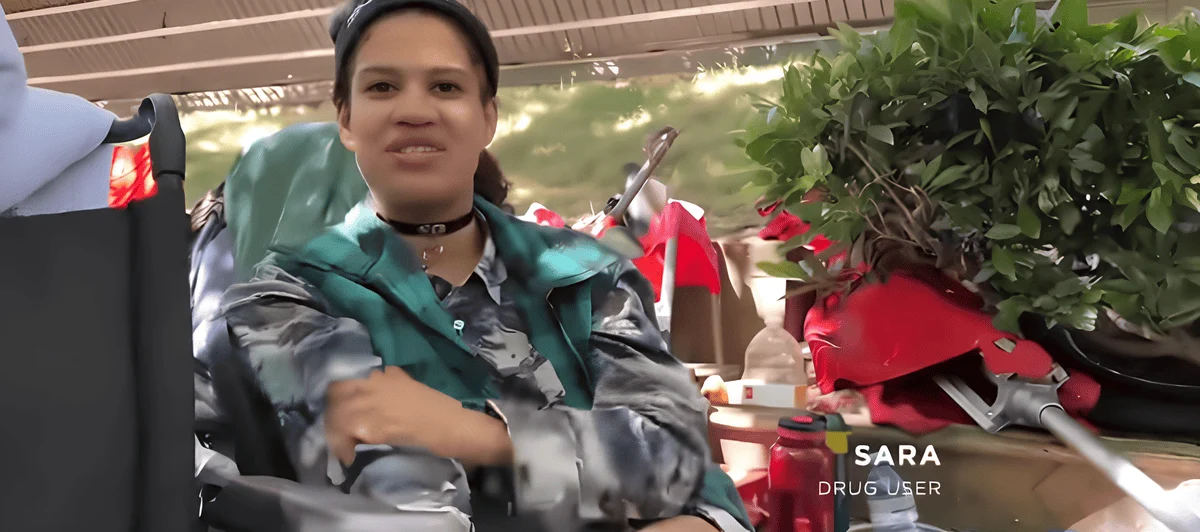
"I'm a young adult from foster care; I've been on the streets since I was a kid. I'm from sex trafficking and… So, I don't know. Hitchhiked across Canada. I'm here now, escaping an abusive relationship."
"There's been a reckoning, a realization over the last number of years that continued enforcement, continually arresting drug addicts, drug users, doesn't stop them from being drug users, doesn't stop the crime from happening. And you can make an argument that it actually can lead to more crime. We believe that there's merit in harm reduction, but we also believe that more treatments are needed for people's complex social needs."
"When people talk about Insite and harm reduction services being enabling, I really don't think that they're understanding what drives catastrophic drug use in this community and other communities. It is shame. It is pain. It is stigma. Anything that tries to ameliorate those feelings is working in a positive direction around people's drug use. We're not being judgmental because judgment only drives people further into the shadows."5
1 Insite was the first legally sanctioned supervised consumption site in North America, opening in 2003 in Vancouver's Downtown Eastside. It operates under a Health Canada exemption from federal drug laws and follows a harm-reduction approach. Rather than requiring abstinence, Insite focuses on reducing the health, social, and economic harms associated with drug use.
2 More recent operational reporting shows the service now functions as part of a wider network of overdose prevention and emergency response sites, with overdose events increasingly being managed across multiple supervised locations and diverted into emergency care rather than occurring solely on-site.
3 People who use drugs in Vancouver's Downtown Eastside have historically relied on emergency departments because structural barriers—such as stigma, unstable housing, lack of identification, and prior negative healthcare experiences—limit access to primary care. Evidence from Canadian harm reduction research also shows supervised consumption services reduce avoidable emergency department strain by redirecting non-fatal overdoses and complications into more appropriate, ongoing care pathways.
4 More recent provincial reporting shows that while Vancouver experienced a sharp rise in deaths during the fentanyl-driven wave of the crisis, British Columbia has since seen fluctuating but recently declining toxic drug deaths after a peak period in the early 2020s. The broader trend highlights that fentanyl remains the dominant driver of overdose mortality in the province, even as annual totals vary year to year and shift across health authorities.
5 Large Canadian evidence reviews conclude that supervised consumption sites do not increase drug use initiation, frequency, or local crime rates, countering a common public misconception. Instead, research consistently finds these services primarily reach long-term, high-risk users and function as a gateway into healthcare, addiction treatment, and social supports rather than a driver of increased substance use.
Continue Learning
Explore the topics covered in this resource with the links below. Whether you're looking for a quick overview, an in-depth article, or another video, these resources can help deepen your understanding. If there's a topic you'd like to see covered or you're looking for something specific, feel free to contact me.
Explore the topics covered in this resource with the links below. If you're looking for something specific or have a suggestion, feel free to contact me.






Share Your Review
Your perspective matters. By sharing your honest thoughts, you can help others understand what this resource is really like beyond a simple summary. Whether it resonated with you, challenged your thinking, or wasn't what you expected, your feedback helps build a more useful and transparent collection of addiction and mental health resources.
Your perspective matters and helps improve this collection of addiction and mental health resources.
There are no reviews yet. Be the first one to write one.